Table of Contents
:contentReference[oaicite:1]{index=1} officially introduced its new Apple M5 chip on October 15, 2025, continuing the rapid evolution of Apple Silicon processors.
While the M5 is not a revolutionary redesign, it delivers important improvements in artificial intelligence processing, graphics performance, energy efficiency, and multitasking capabilities.
Built using a third-generation 3nm manufacturing process, the M5 chip focuses heavily on AI acceleration and GPU enhancements while maintaining Apple’s reputation for excellent battery life.
For creative professionals, developers, AI researchers, and power users, the M5 may represent one of Apple’s most balanced performance upgrades so far.
Apple Introduces the M5 Chip
The M5 succeeds the highly successful Apple M4 processor and continues Apple’s strategy of tightly integrating CPU, GPU, memory, and AI components into a unified architecture.
Although the CPU improvements are relatively moderate compared to the previous generation, Apple has significantly expanded the chip’s AI and graphics capabilities.
Main Focus Areas of the M5
- Enhanced AI performance
- Improved GPU rendering
- Better power efficiency
- Faster machine learning tasks
- Longer battery life
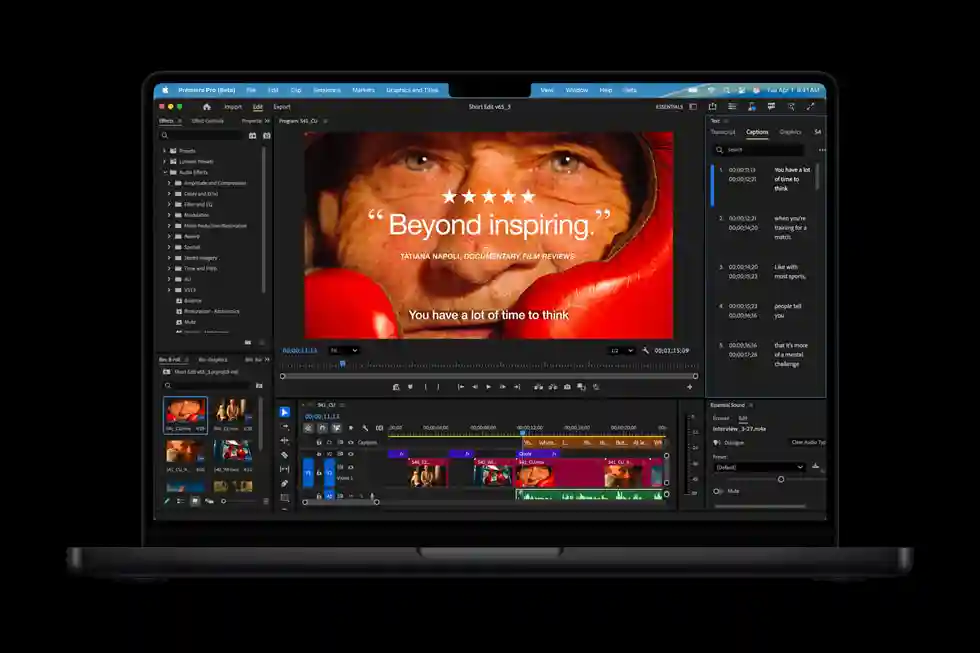
The M5 is particularly optimized for workloads involving local AI models, creative software, and advanced graphics rendering.
M5 Architecture and Specifications
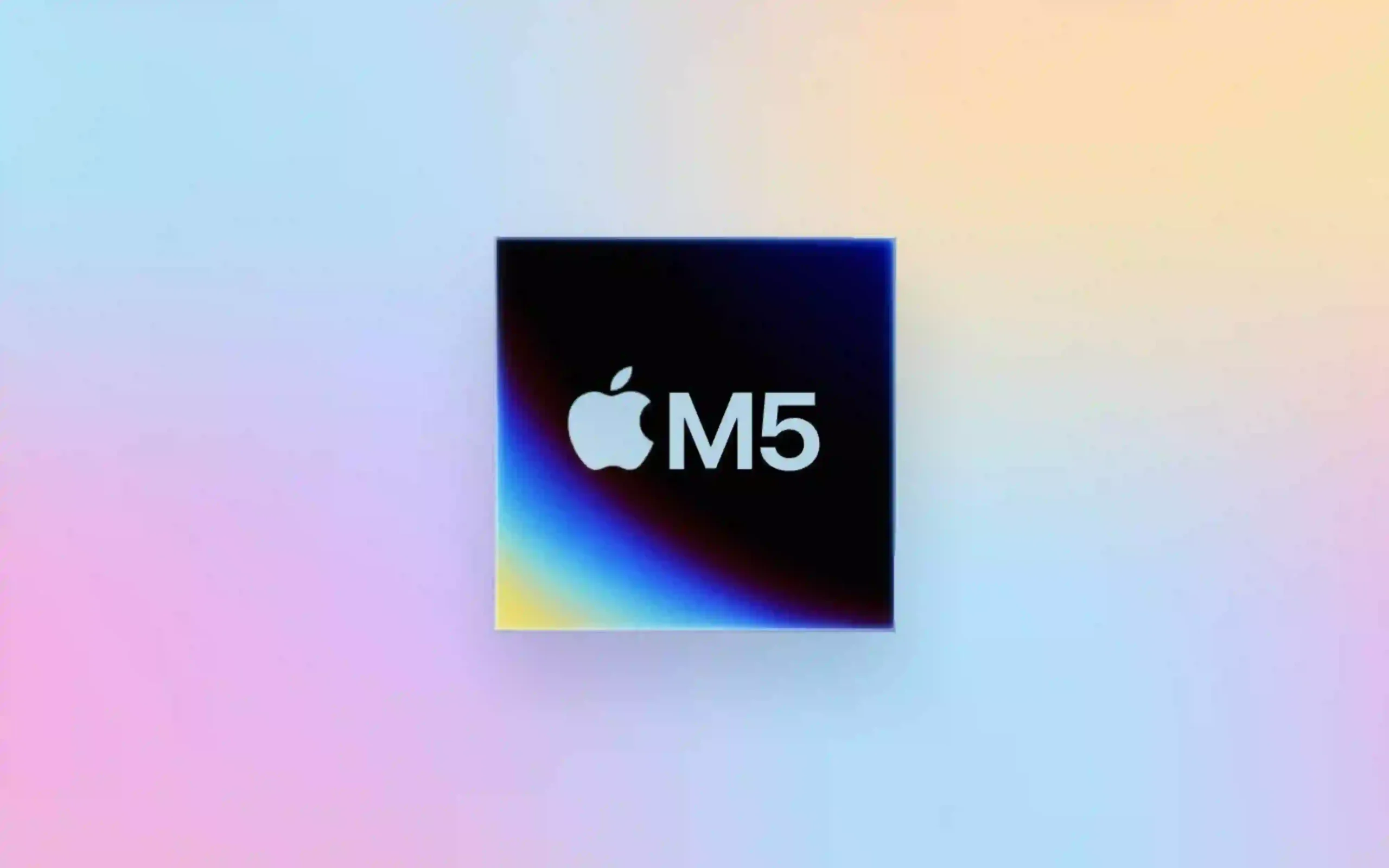
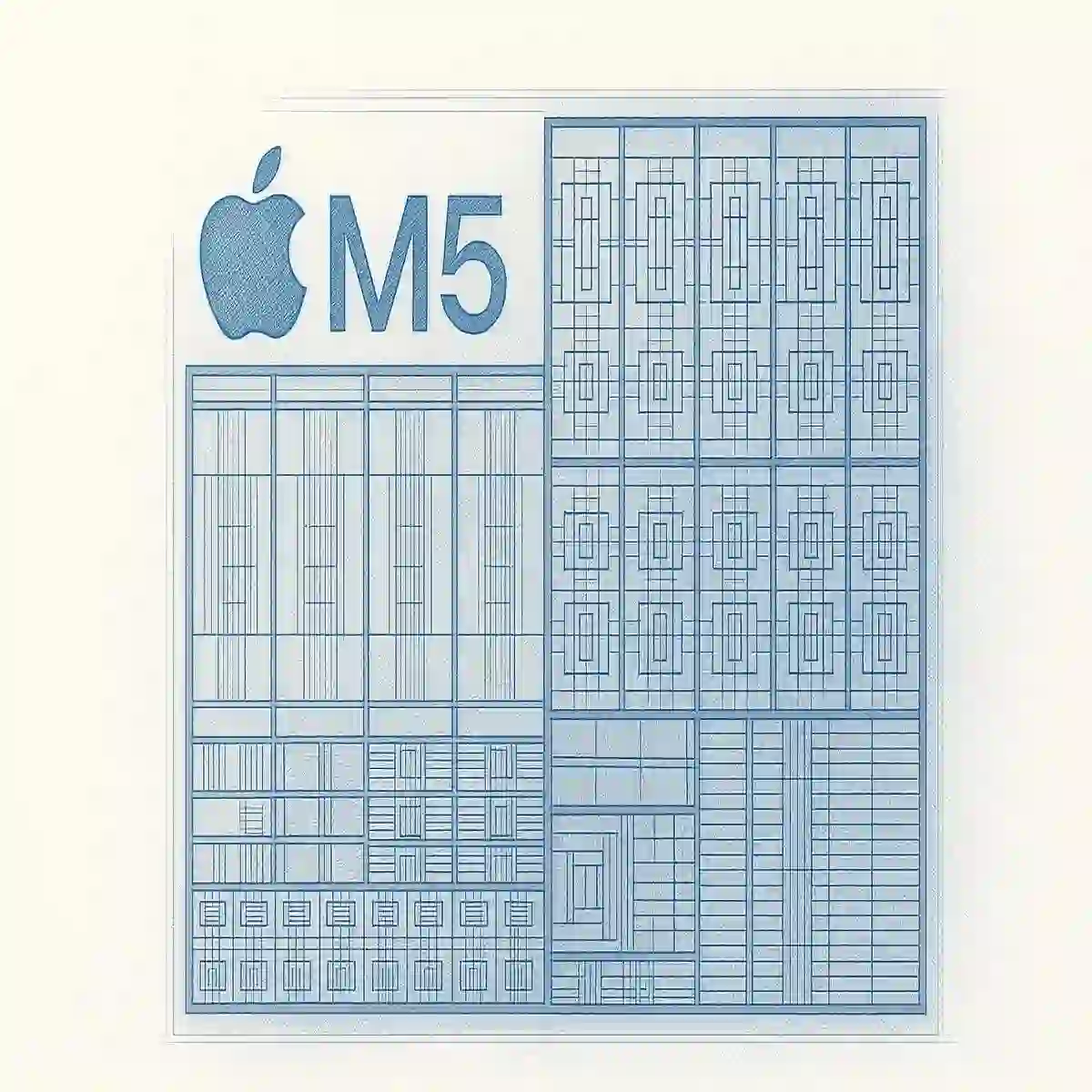
The base M5 chip includes a powerful combination of CPU, GPU, Neural Engine, and unified memory upgrades.
M5 Technical Specifications
- 10-core CPU
- Up to 4 performance cores
- 6 efficiency cores
- 10-core GPU
- 16-core Neural Engine
- Up to 32GB unified memory
- 153GB/s memory bandwidth
The memory bandwidth improvement represents approximately a 30% increase compared to the M4 generation.
Apple also introduced dedicated Neural Accelerators for each GPU core, greatly improving AI-related graphics processing.
CPU Performance Improvements
Apple describes the M5 as featuring the “world’s fastest performance core,” though the actual CPU improvements remain evolutionary rather than revolutionary.
Single-Core Performance
The M5 delivers approximately 10–12% faster single-core performance compared to the M4.
This improvement mainly benefits:
- Web browsing
- General productivity
- Office applications
- Light content editing
Multi-Core Performance
Multithreaded workloads receive larger gains, with improvements ranging between 15–20%.
Examples include:
- Code compilation
- Video exporting
- Large project rendering
- Heavy multitasking
Apple claims Xcode compilation speeds can be up to 1.2x faster on comparable configurations.
GPU and Graphics Enhancements
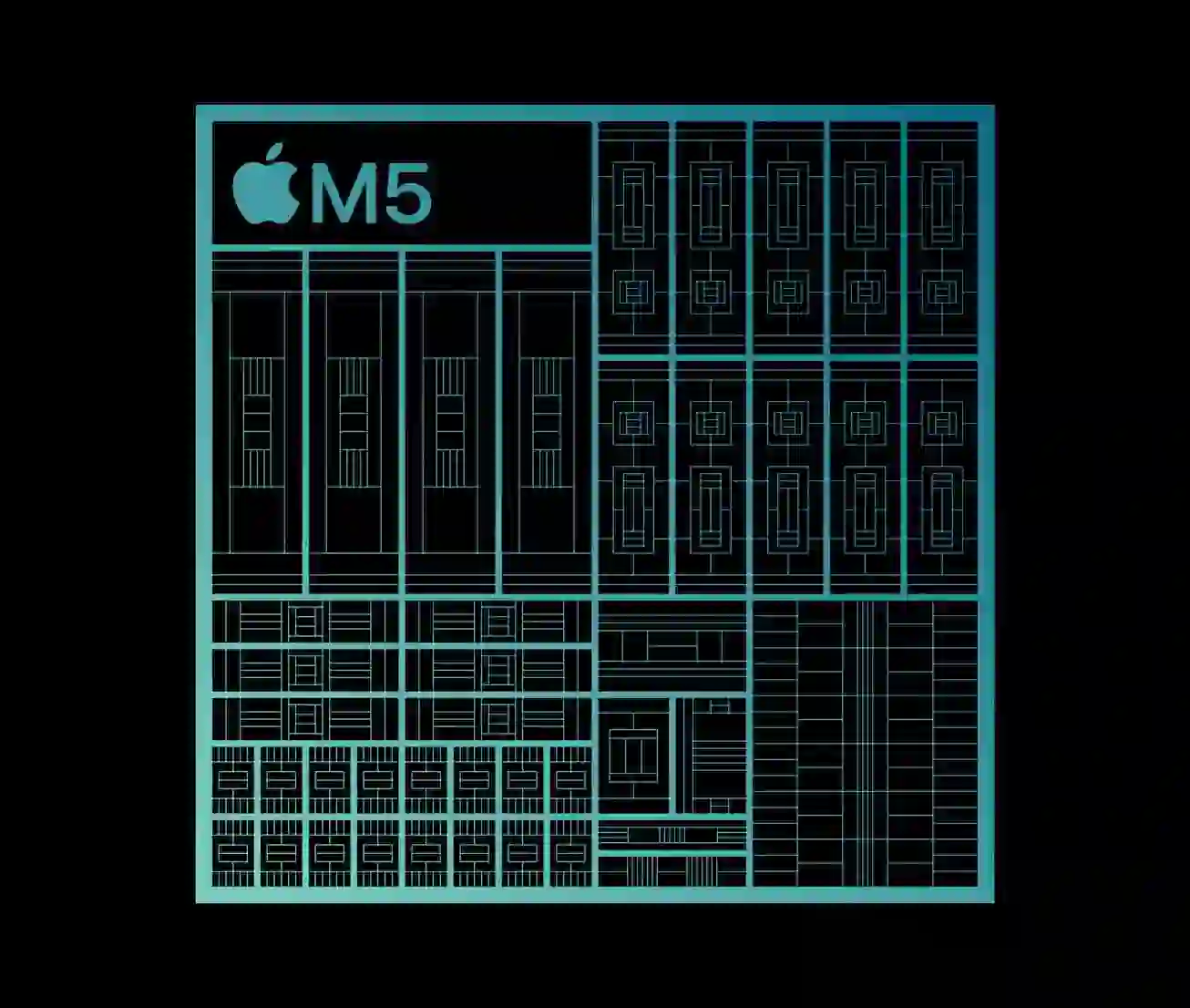
The GPU improvements represent one of the most noticeable upgrades in the M5 architecture.
Apple redesigned shader performance, ray tracing efficiency, and dynamic caching technologies.
GPU Performance Gains
- 30–35% faster graphics performance
- Up to 45% faster ray tracing
- 1.6x higher gaming frame rates
- 1.7x faster Blender rendering
The M5 is especially attractive for:
- 3D artists
- Video editors
- Game developers
- Motion graphics professionals
- Creative workflows
Applications using advanced rendering technologies will benefit most from the upgraded GPU architecture.
AI and Neural Engine Performance
Artificial intelligence is arguably the M5 chip’s biggest selling point.
The new GPU-level Neural Accelerators allow significantly faster local AI processing without relying heavily on cloud computing.
AI Performance Improvements
- Over 4x faster GPU AI compute
- Up to 3.5x faster AI workloads
- Improved local language model support
- Enhanced image and video AI processing
The upgraded 16-core Neural Engine powers Apple Intelligence features such as:
- Image Playground
- Genmoji
- AI video enhancement
- On-device generative AI
Apple claims AI video enhancement in applications like Topaz Video AI can run up to 1.8x faster.
This emphasis on local AI processing also improves privacy and reduces dependence on cloud-based services.
Battery Life and Efficiency
Despite the higher performance, Apple continues focusing heavily on energy efficiency.
The M5 maintains excellent thermal efficiency while extending battery life.
Battery Improvements
- Up to 24 hours video playback
- Approximately 2 extra hours over M4
- Fast charging to 50% in 30 minutes
- Improved sustained performance efficiency
Apple also claims the M5 is:
- 4x more efficient than M1 systems
- 14x more efficient than Intel-based MacBook Pros
The improved efficiency becomes especially important during AI and GPU-intensive workloads.
Who Should Upgrade to the M5?
The M5 upgrade makes the most sense for users working with demanding creative or AI-based applications.
Best Users for the M5
- AI developers
- Machine learning researchers
- Video editors
- 3D artists
- Software developers
- Advanced multitaskers
Users focused mainly on everyday productivity tasks may find the M4 still more than capable.
However, professionals working with local AI models, rendering, or graphics-heavy applications will likely notice significant performance improvements.
Limitations and Real-World Expectations
Although Apple’s performance claims are impressive, many benchmarks are based on internal testing using controlled configurations.
Actual performance may vary depending on:
- Software optimization
- Thermal conditions
- Memory configuration
- Specific workloads
Independent benchmark testing is still limited following the chip’s release.
Additionally, the M5 does not dramatically increase CPU core counts or radically redesign the architecture.
For some users, the upgrade may feel more incremental than transformative.
Final Thoughts
The Apple M5 represents another major step in Apple’s long-term Silicon strategy.
While CPU improvements remain relatively modest, the chip’s AI acceleration, GPU performance, and power efficiency demonstrate Apple’s growing focus on the future of local artificial intelligence and advanced creative workflows.
For professionals working in graphics, AI, and content creation, the M5 offers meaningful advantages over the M4.
As AI becomes increasingly integrated into operating systems and software applications, Apple’s emphasis on on-device machine learning could become one of the company’s biggest competitive advantages in the years ahead.

Frequently Asked Questions
How much faster is the Apple M5 compared to the M4?
The M5 offers approximately 10–20% CPU improvements, up to 35% faster graphics performance, and significantly better AI processing.
What is the biggest improvement in the M5 chip?
The largest improvements are in AI acceleration, GPU rendering, and machine learning performance.
Does the M5 improve battery life?
Yes, the M5 can deliver up to 24 hours of video playback and improved energy efficiency.
Who should upgrade to the M5?
The upgrade is most beneficial for AI developers, video editors, 3D artists, and creative professionals.
How much RAM does the base M5 support?
The base M5 supports up to 32GB of unified memory.Apple’s M5 chip, introduced on October 15, 2025, represents an incremental enchancment over the M4, with a deal with enhanced AI capabilities, graphics efficiency, and effectivity. Constructed on a third-generation 3nm course of, the bottom M5 encompasses a 10-core CPU (as much as 4 efficiency cores + 6 effectivity cores), a 10-core GPU with devoted Neural Accelerators per core, a 16-core Neural Engine, and as much as 32GB of unified reminiscence with 153GB/s of bandwidth (a ~30% improve over the M4). Whereas the CPU enhancements are modest (10-20%), the GPU and AI enhancements are extra substantial, making the M5 significantly enticing for inventive and machine studying workflows. Efficiency claims are based mostly on Apple inside testing until in any other case famous.

CPU efficiency
The M5’s CPU emphasizes effectivity and multithreaded duties, that includes what Apple calls the “world’s quickest efficiency core.” The enhancements are evolutionary relatively than revolutionary.
| Side | M5 vs. M4 efficiency | Particulars/Notes |
|---|---|---|
| Single-core | ~10-12% sooner | Based mostly on preliminary Geekbench scores and IPC enhancements; appropriate for on a regular basis duties reminiscent of looking or gentle enhancing. |
| Multicore | 15-20% sooner | As much as 20% sooner multithreaded workloads reminiscent of code compilation (e.g., 1.2x sooner Xcode builds); excellent for builders and multitasking. |
| Core configuration | Equal (as much as 10 cores) | No change within the variety of efficiency/effectivity cores; clock speeds unchanged in base fashions. |
GPU efficiency
The M5’s next-generation 10-core GPU consists of enhancements in ray tracing and dynamic caching, boosting graphics and compute-intensive duties.
| Side | M5 vs. M4 efficiency | Particulars/Notes |
|---|---|---|
| Normal graphics | As much as 30-35% sooner | With improved shader cores; as much as 1.6x increased body charges in video games. |
| Ray Tracing | As much as 45% increased | For purposes that benefit from third-generation ray tracing, reminiscent of 3D rendering. |
| Particular benchmarks | – 1.7x sooner in Blender (3D rendering) – As much as 1.6x body charges in video games |
Examined on 14-inch MacBook Professional configurations. |
AI and Neural Engine efficiency
AI is the M5’s standout space, with per-core Neural Accelerators within the GPU enabling on-device processing of bigger fashions.
| Side | M5 vs. M4 efficiency | Particulars/Notes |
|---|---|---|
| Most GPU compute (AI) | Over 4x sooner | For workloads reminiscent of broadcast fashions (e.g., textual content to picture in Draw Issues) or native LLMs. |
| Normal AI | As much as 3.5x sooner | It consists of Neural Engine updates; e.g., 1.8x sooner AI video enhancement in Topaz Video AI. |
| Neural Engine | Quicker (no particular proportion) | The 16-core design helps Apple Intelligence options reminiscent of Picture Playground and Genmoji; it permits bigger fashions to run on the system with out cloud dependency. |
Battery life and effectivity
The M5 maintains Apple’s deal with power effectivity, contributing to longer battery life within the 14-inch MacBook Pro.
| Battery life | As much as 24 hours (video playback) | Roughly 2 hours longer than the M4’s 22 hours in comparable configurations; as much as 4x extra environment friendly than the M1 and 14x extra environment friendly than Intel-based Professionals. Quick charging to 50% in half-hour. |
| Vitality effectivity | Improved (course of node + structure) | Reduces energy utilization for AI/graphics; helps sustained battery efficiency. |
- Key findings:
- Who’s it for? Improve in case you’re into AI/ML (e.g., native mannequin coaching) or graphics-intensive work; in any other case, the M4 remains to be succesful for many customers.
- Limitations: Enhancements are examined on comparable configurations (e.g., 10-core CPU/GPU, 32 GB of RAM); precise outcomes will fluctuate relying on workload. Impartial benchmarks are preliminary as of launch.