Table of Contents
- What Are Root Certificates?
- Why Root Certificates Matter
- Common Security Certificate Errors
- Where to Download Root Certificates
- How to Install Root Certificates in Windows
- Trusted Root Certification Authorities
- Security Risks and Best Practices
- Troubleshooting Certificate Problems
- Frequently Asked Questions
Root certificates are extremely important components of internet security.
They help operating systems verify whether:
- Websites are legitimate
- Programs are authentic
- Encrypted connections are secure
- Digital signatures can be trusted
If a certificate is missing or invalid, Windows may block access to websites or applications for security reasons.
This guide explains how to manually install trusted root certificates in :contentReference[oaicite:4]{index=4}.
What Are Root Certificates?
A root certificate is a digital certificate issued by a trusted Certificate Authority (CA).
These certificates are used to validate:
- SSL/TLS website encryption
- Software authenticity
- Secure communications
- Digital signatures
When your browser visits a secure website using HTTPS, the operating system checks whether the certificate chain leads back to a trusted root certificate.
Why Root Certificates Matter
Without trusted certificates, encrypted internet communication would not be secure.
Main Benefits
- Protects against fake websites
- Prevents phishing attacks
- Verifies software authenticity
- Enables secure HTTPS browsing
- Improves overall cybersecurity
Root certificates form the foundation of modern internet trust systems.
Common Security Certificate Errors
When Windows cannot validate a certificate properly, users may encounter security warnings.
Common Error Messages
- “There is a problem with this website’s security certificate”
- “Certificate not trusted”
- “SSL certificate error”
- “Connection is not private”
These warnings may appear because:
- The root certificate is missing
- The certificate expired
- The certificate authority is untrusted
- The system date is incorrect
Where to Download Root Certificates
Trusted Certificate Authorities provide public root certificates for download.
Popular Certificate Authorities
- :contentReference[oaicite:5]{index=5}
- :contentReference[oaicite:6]{index=6}
- :contentReference[oaicite:7]{index=7}
- :contentReference[oaicite:8]{index=8}
Always download certificates directly from official trusted sources.
How to Install Root Certificates in Windows
Installing certificates manually in Windows is relatively simple.
Step 1: Download the Certificate
Download the root certificate file from a trusted Certificate Authority website.
Common certificate file extensions include:
- .crt
- .cer
- .pem
Step 2: Open the Certificate Installer
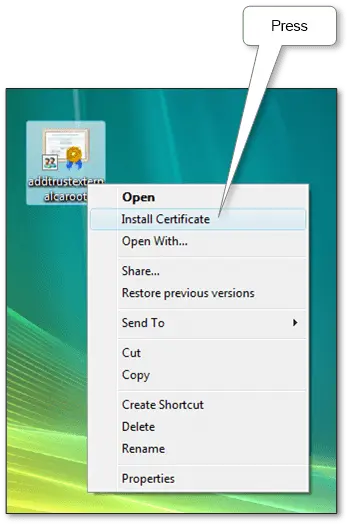
- Locate the downloaded certificate file
- Right-click the file
- Select Install Certificate
This launches the Windows Certificate Import Wizard.
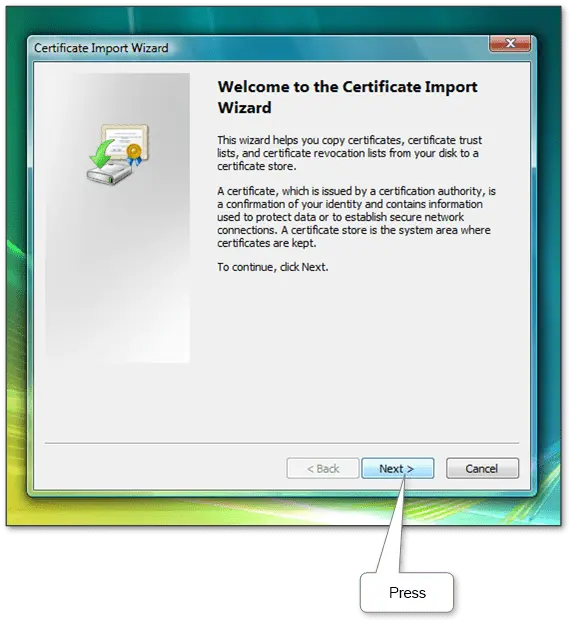
Step 3: Start the Certificate Import Wizard
Inside the wizard:
- Click Next
- Choose the installation location
You can install certificates for:
- Current User
- Local Machine
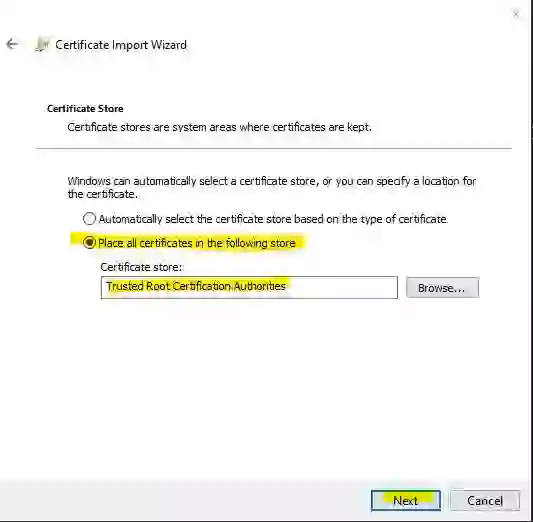
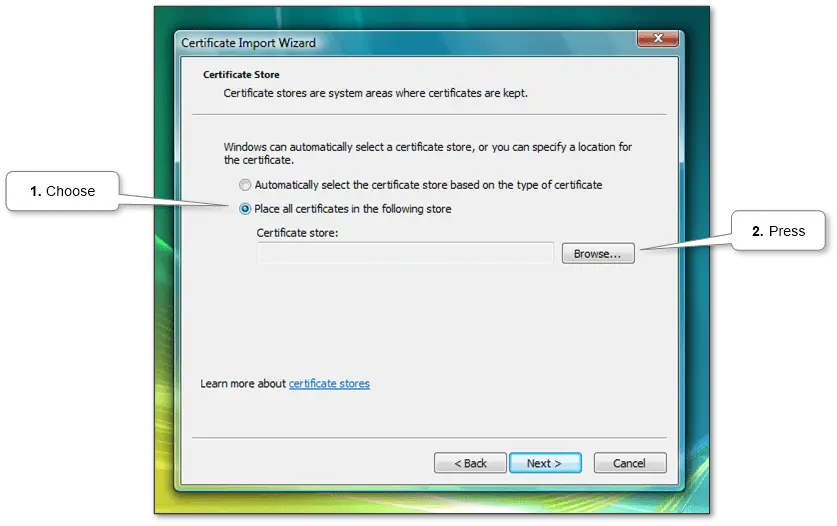
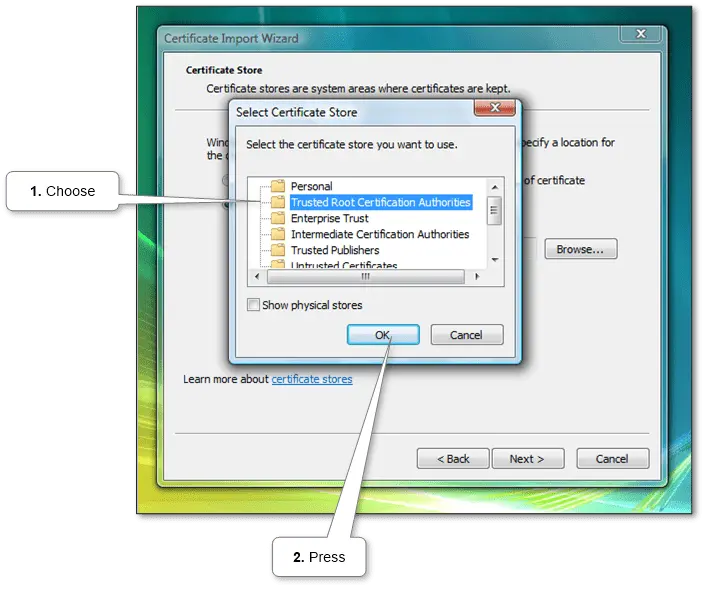
Step 4: Select the Certificate Store
Choose:
- Place all certificates in the following store
Then select:
- Trusted Root Certification Authorities
This is the trusted store used by Windows to validate certificates.
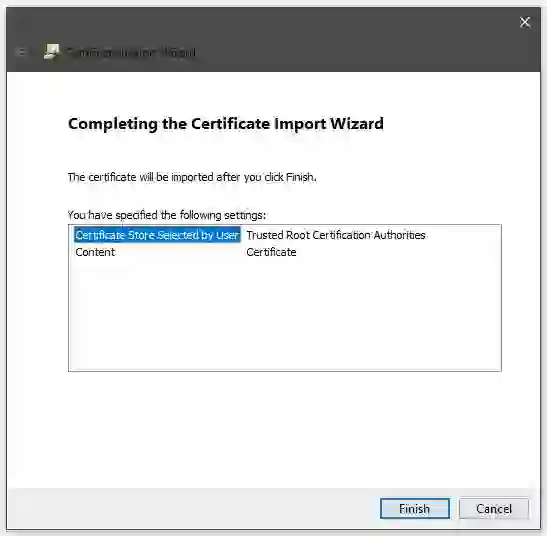
Step 5: Complete the Installation
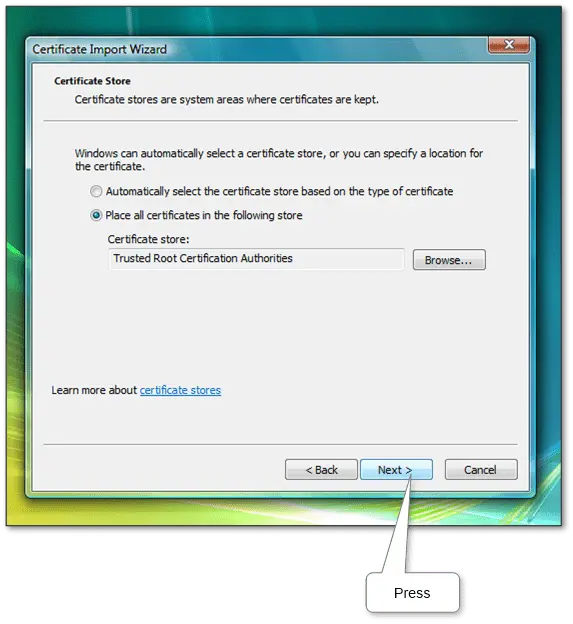
- Click Next
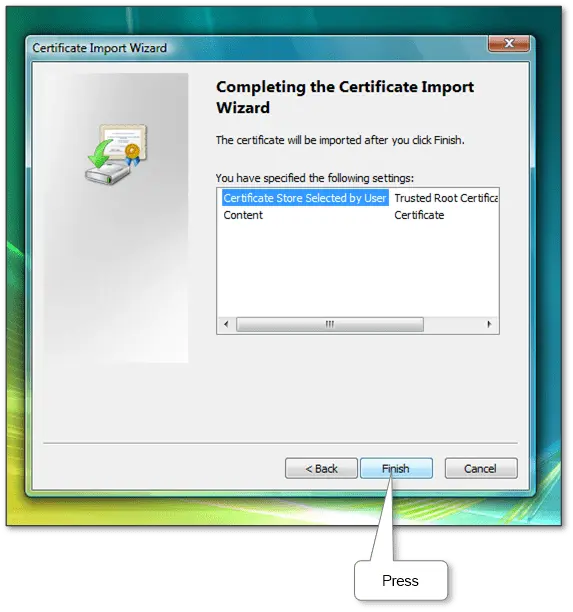
- Click Finish
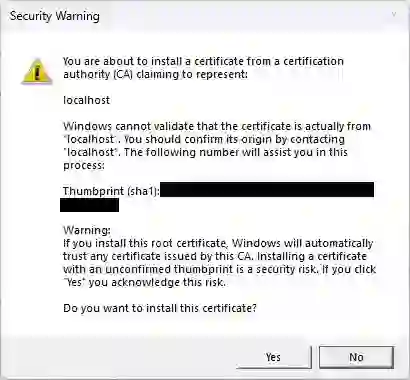
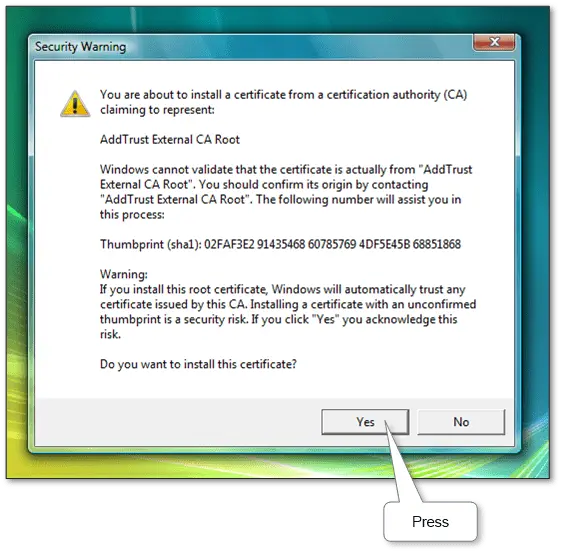
Windows may display a security confirmation dialog.
Confirm the installation if you trust the certificate source.
Trusted Root Certification Authorities
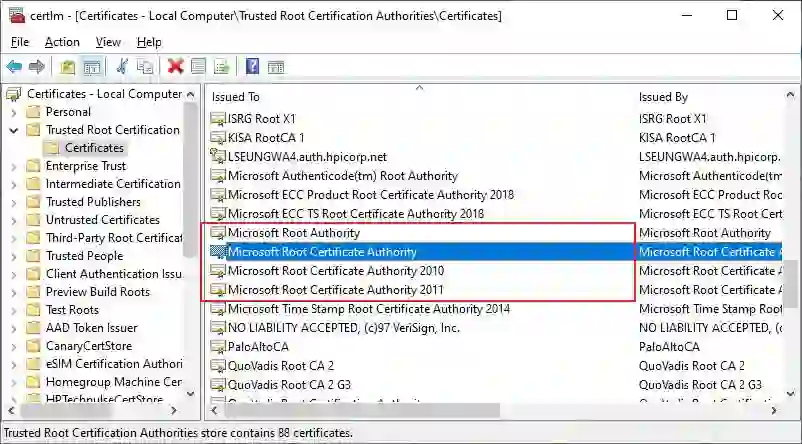
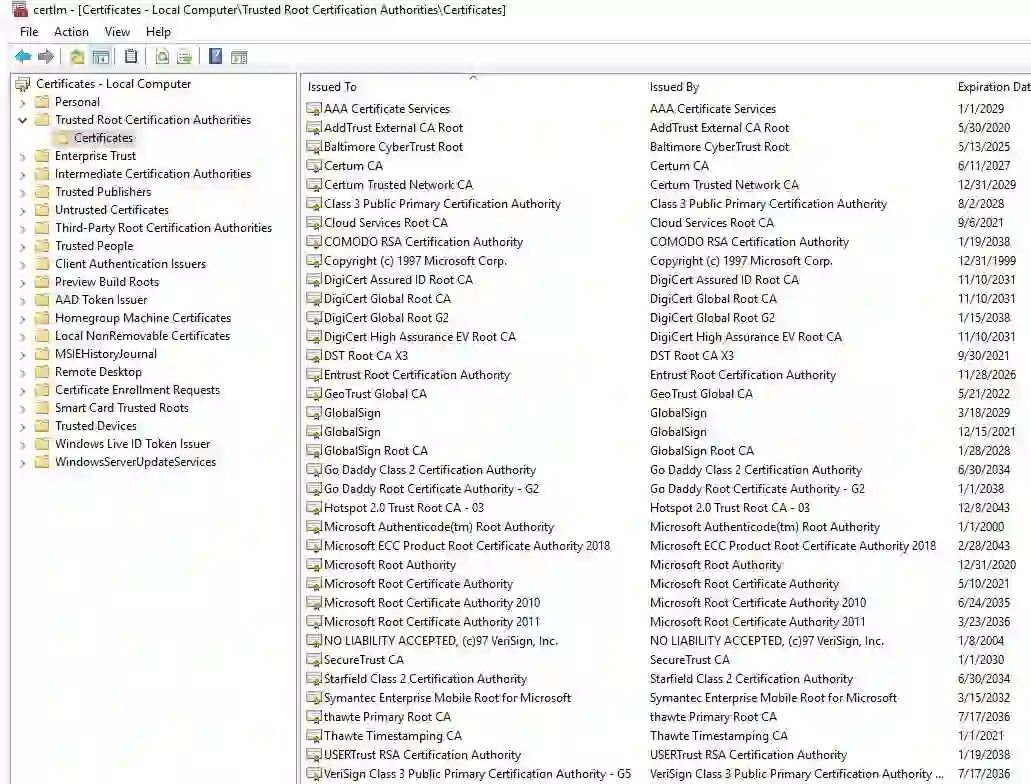
The Trusted Root Certification Authorities store contains certificates trusted by Windows.
Its Role
- Verifies secure websites
- Authenticates software publishers
- Supports encrypted communication
- Prevents spoofing attacks
Incorrect certificates placed here may create serious security risks.
Security Risks and Best Practices
Installing certificates from unknown sources can compromise system security.
Best Practices
- Only install trusted certificates
- Verify certificate fingerprints
- Download from official CA websites
- Remove outdated certificates
- Keep Windows updated
Malicious certificates could allow attackers to intercept encrypted traffic.
Troubleshooting Certificate Problems
If certificate errors continue after installation, several issues may exist.
Common Causes
- Expired certificates
- Incorrect system time
- Damaged certificate chain
- Browser cache problems
- Windows update issues
Possible Solutions
- Restart the browser
- Restart the computer
- Update Windows
- Clear SSL cache
- Reinstall the certificate
Final Thoughts
Root certificates play a critical role in modern cybersecurity and encrypted internet communication.
Although :contentReference[oaicite:9]{index=9} automatically updates most trusted certificates, manual installation is sometimes necessary for:
- Enterprise systems
- Development environments
- Private certificate authorities
- Legacy software
Always verify certificate sources carefully before installation to maintain a secure system.
Frequently Asked Questions
What is a root certificate?
A root certificate is a trusted digital certificate used to verify websites and software authenticity.
Why do I get security certificate warnings?
This usually happens when a certificate is missing, expired, or issued by an untrusted authority.
Is it safe to install root certificates manually?
Yes, but only if the certificate comes from a trusted Certificate Authority.
Where are certificates stored in Windows?
Trusted certificates are stored in the Trusted Root Certification Authorities store.
Can fake certificates be dangerous?
Yes, malicious certificates can compromise encrypted communication and security.
Helpful Resources:
- Microsoft Certificate Management Documentation
- DigiCert Certificate Support
- Sectigo Certificate Authority
If the digital certificates doesn’t belong to a trusted authority, you’ll obtain an error message within the type “There’s a drawback with the safety certificates”, and the system could block the connection to the web site or the launch of this system to your security.
There are numerous certificates authorities, amongst which probably the most well-known are Symantec® and Comodo®. And their root certificates are at all times freely obtainable for obtain.
Home windows has built-in certificates and routinely renews them. Nonetheless, you possibly can nonetheless optionally manually add further root certificates to Home windows from trusted certificates authorities (CAs).
That is simply accomplished in a number of steps. The strategy is appropriate for all variations of Home windows.
-
On the downloaded root certificates file, right-click and choose the ‘Set up Certificates’. Within the window that opens, the set up wizard press ‘Subsequent’.
-
Subsequent, you might want to select the suitable place to import – Trusted Root Certification Authorities.
-
Then simply proceed the proposed steps of the wizard.
-
Because of this, you might want to affirm the set up of our certificates.

Now all is finished. Web sites and packages authenticated by this root certificates will now work effective.