🟢 Introduction: The Reality of SEO 2026
In today’s digital world, ranking on search engines like Google is no longer optional—it is essential.
Millions of websites compete for attention every day, but only a small percentage actually succeed in getting organic traffic. The difference between success and failure is Search Engine Optimization (SEO).
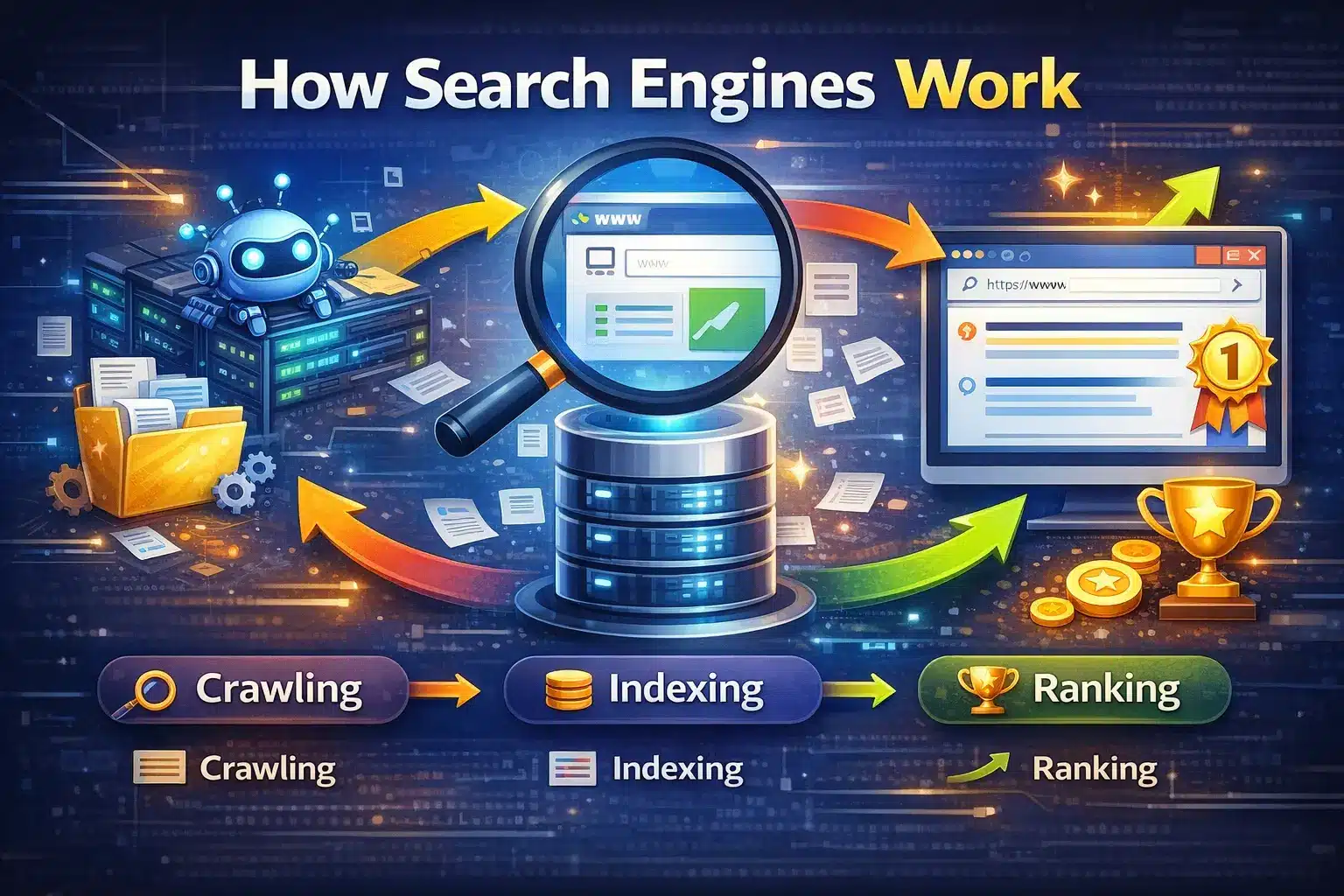
SEO in 2026 has evolved far beyond simple keyword usage. It now focuses on:
-
User intent and behavior
-
Content depth and authority
-
Website performance and experience
-
Trust, credibility, and signals
If you want to build a website that:
-
Gets free traffic
-
Ranks consistently
-
Gets approved by Google AdSense
Then this guide is exactly what you need.
🟢 What is SEO? (Deep Explanation)
SEO (Search Engine Optimization) is the process of optimizing your website to improve its visibility in organic (non-paid) search results.
But let’s simplify it:
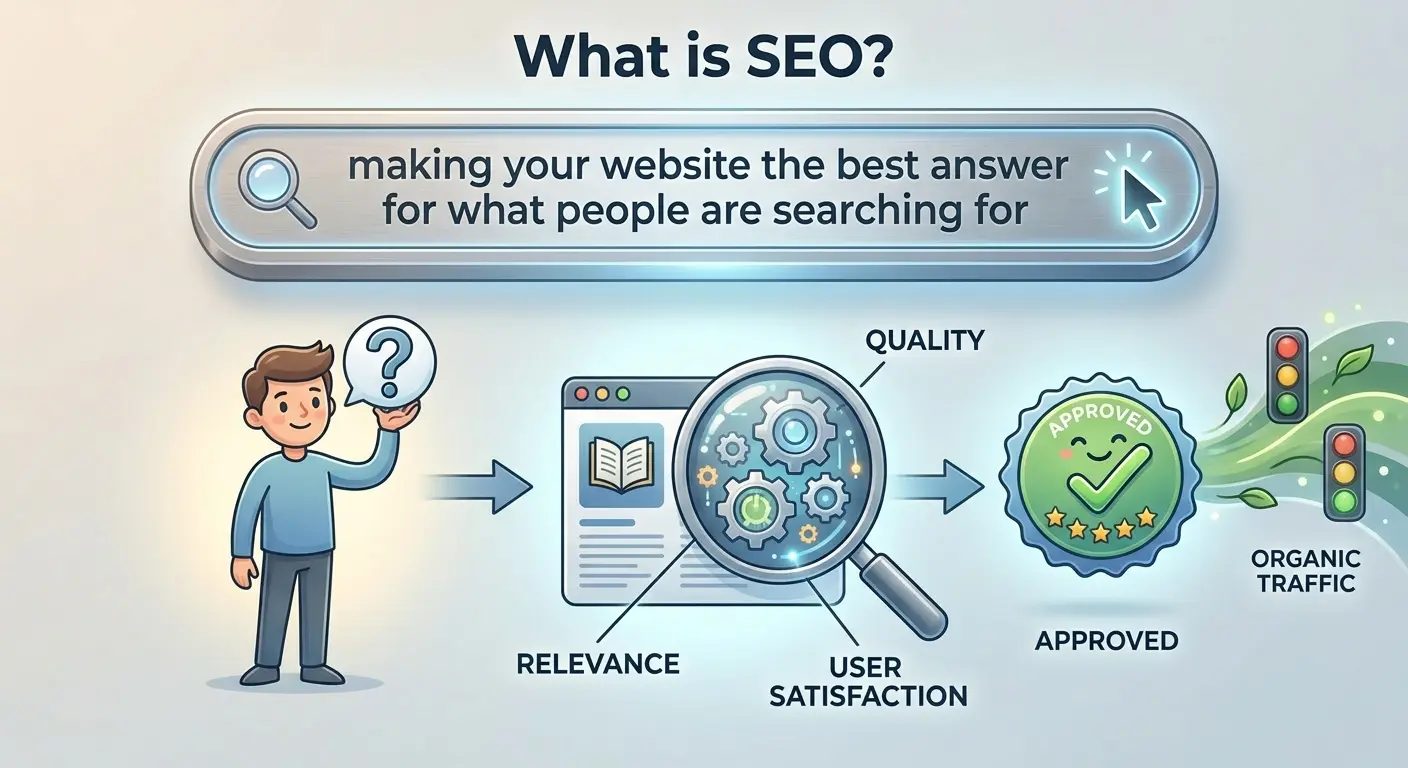
👉 SEO = Making your website the best answer for what people are searching for.
Search engines analyze your content based on:
-
Relevance
-
Quality
-
Authority
-
User satisfaction
If your page satisfies these factors better than competitors, you rank higher.
🟢 How Search Engines Really Work (Behind the Scenes)
Understanding how search engines operate gives you a massive advantage.
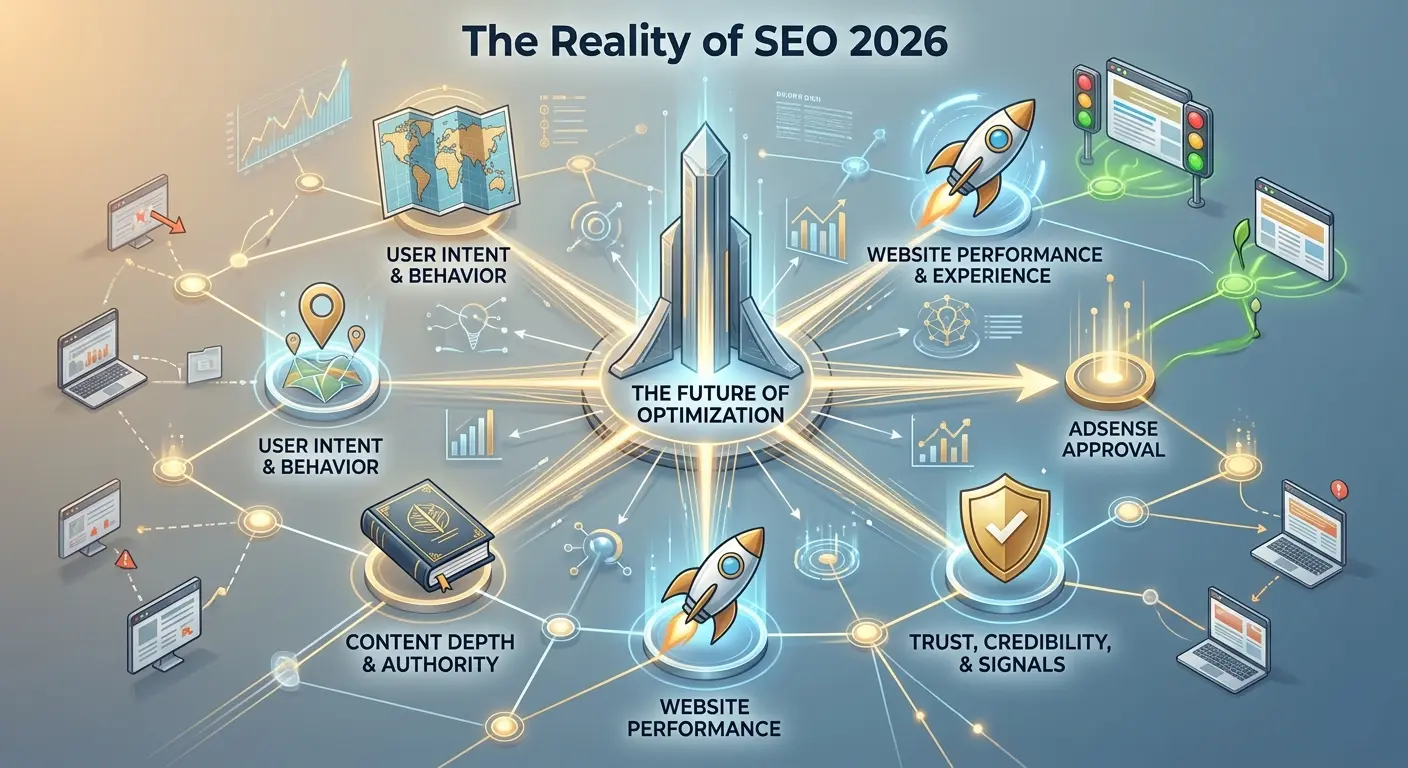
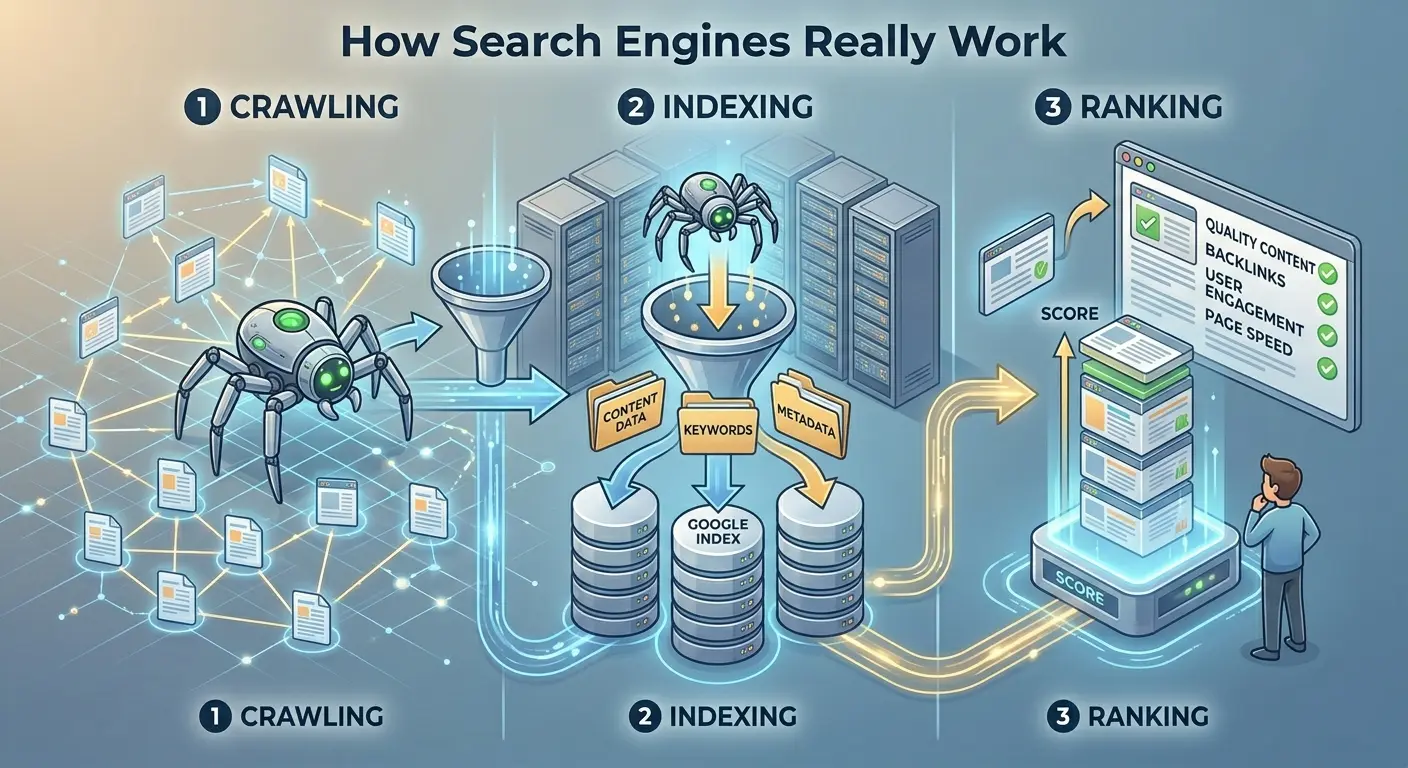
1. Crawling
Search engines send bots (spiders) to discover pages across the internet.
👉 If your site is not crawlable → it will NOT rank.
2. Indexing
Once discovered, your content is stored in a huge database.
👉 If your content is not indexed → it does not exist for Google.
3. Ranking
Google uses complex algorithms to rank pages based on hundreds of factors.
Top ranking factors include:
-
Content quality
-
Backlinks
-
User engagement
-
Page speed
🟢 Types of SEO (Complete Breakdown)
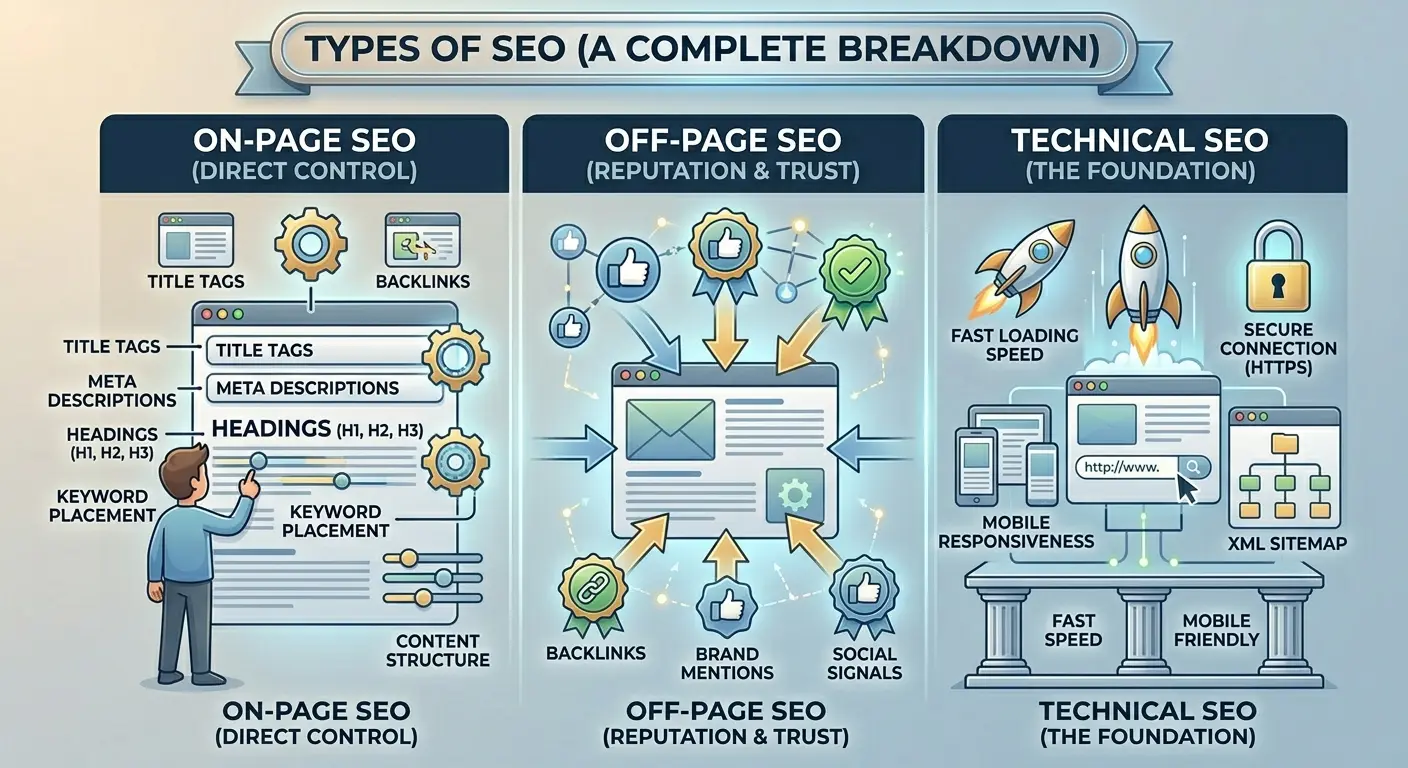
🔹 On-Page SEO (Inside Your Website)
This includes everything you control directly:
-
Title tags
-
Meta descriptions
-
Headings (H1, H2, H3)
-
Keyword placement
-
Content structure
👉 This is where beginners should start.
🔹 Off-Page SEO (Outside Your Website)
This focuses on authority and trust:
-
Backlinks
-
Brand mentions
-
Social signals
👉 Think of it as your website’s reputation.
🔹 Technical SEO (The Hidden Power)
This ensures your website is technically optimized:
-
Fast loading speed
-
Mobile responsiveness
-
Secure connection (HTTPS)
-
Clean URL structure
-
XML sitemap
👉 Even great content will fail without technical SEO.
🟢 Keyword Research: The Foundation of Ranking
Keyword research is the most important step in SEO.
If you target the wrong keywords → you will NEVER rank.
Types of Keywords
1. Short-Tail Keywords
Example:
👉 “SEO”
-
High competition
-
Broad meaning
2. Long-Tail Keywords (Best for Beginners)
Example:
👉 “SEO for beginners step by step 2026”
-
Low competition
-
High conversion
-
Easier to rank
Keyword Strategy (Advanced)
To win in 2026:
-
Target low competition keywords
-
Focus on search intent
-
Build topic clusters
🟢 Search Intent: The Secret Weapon
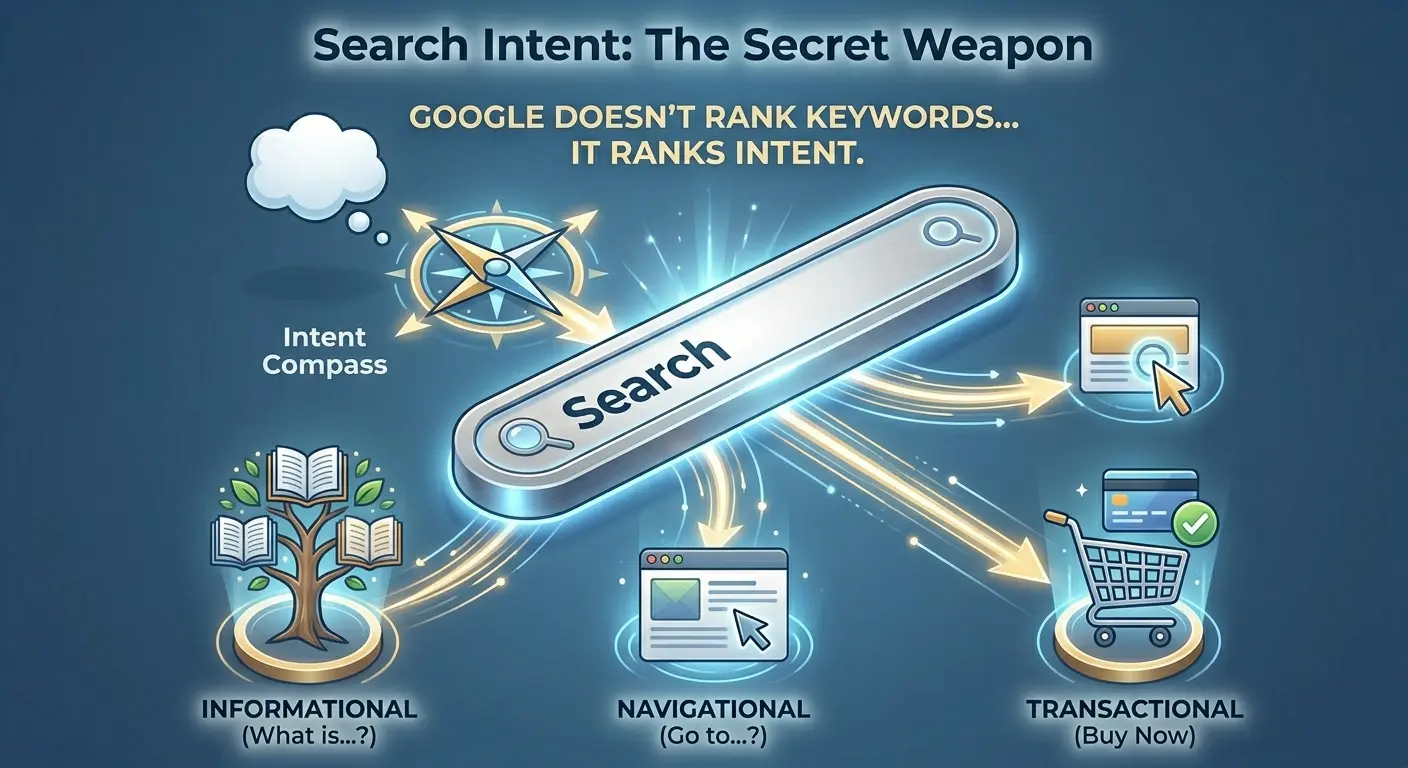
Google doesn’t rank keywords anymore… it ranks intent.
Types of Intent:
1. Informational
User wants information
Example: “What is SEO?”
2. Navigational
User wants a specific website
Example: “YouTube”
3. Transactional
User wants to buy or act
Example: “Buy hosting”
👉 If your content does NOT match intent → it will not rank.
🟢 Content is King (But Only If Done Right)
Content is still the most powerful ranking factor.
But NOT any content…
High-Quality Content Must:
-
Solve a real problem
-
Be detailed and comprehensive
-
Be easy to read
-
Be well-structured
-
Be original
Content Length Strategy
Long-form content performs better because:
-
Covers topics deeply
-
Keeps users longer on page
-
Builds authority
👉 Articles over 2000+ words rank significantly better.
🟢 SEO Writing Formula (Step-by-Step)
1. Title Optimization
Your title should:
-
Include the main keyword
-
Be جذاب (engaging)
-
Trigger curiosity
2. Introduction
-
Hook the reader
-
Explain what they will learn
-
Keep it simple and clear
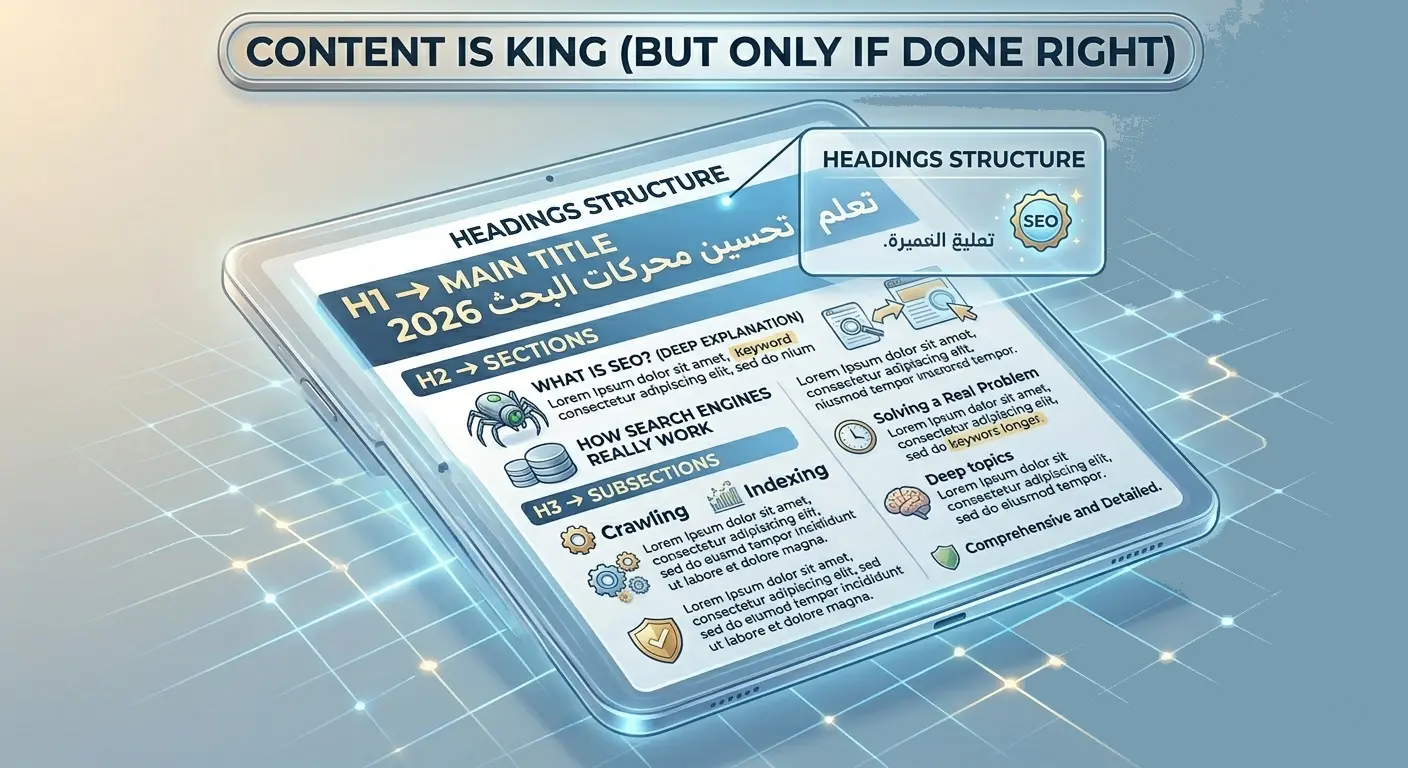
3. Headings Structure
Use:
-
H1 → Main title
-
H2 → Sections
-
H3 → Subsections
👉 This improves readability AND SEO.
4. Keyword Placement
Place keywords in:
-
Title
-
First 100 words
-
Headings
-
Naturally in content
⚠️ Avoid keyword stuffing.
🟢 Internal Linking Strategy (Powerful Trick)
Link your articles together.
Benefits:
-
Improves SEO
-
Helps Google understand your site
-
Increases session time
🟢 External Linking (Trust Signal)
Linking to authority websites like:
-
Google
Shows that your content is:
-
Well-researched
-
Credible
🟢 Image SEO (Hidden Ranking Factor)
Most beginners ignore this… big mistake.
Optimize Images By:
-
Using descriptive file names
-
Adding ALT text
-
Compressing size
-
Using relevant images
🟢 Backlinks: The #1 Ranking Factor
Backlinks = Votes of confidence.
The more high-quality backlinks you have → the higher you rank.
How to Get Backlinks:
-
Write high-quality content
-
Guest posting
-
Outreach
-
Social sharing
🟢 Technical SEO Checklist
✔ Fast website (under 3 seconds)
✔ Mobile-friendly design
✔ HTTPS security
✔ Clean URLs
✔ Sitemap submission
🟢 User Experience (UX) in 2026
Google now ranks based on user behavior.
Important UX Signals:
-
Bounce rate
-
Time on site
-
Click-through rate
👉 Better experience = better rankings.
🟢 Common SEO Mistakes (Avoid These)
❌ Copying content
❌ Ignoring keywords
❌ Poor design
❌ Slow website
❌ No structure
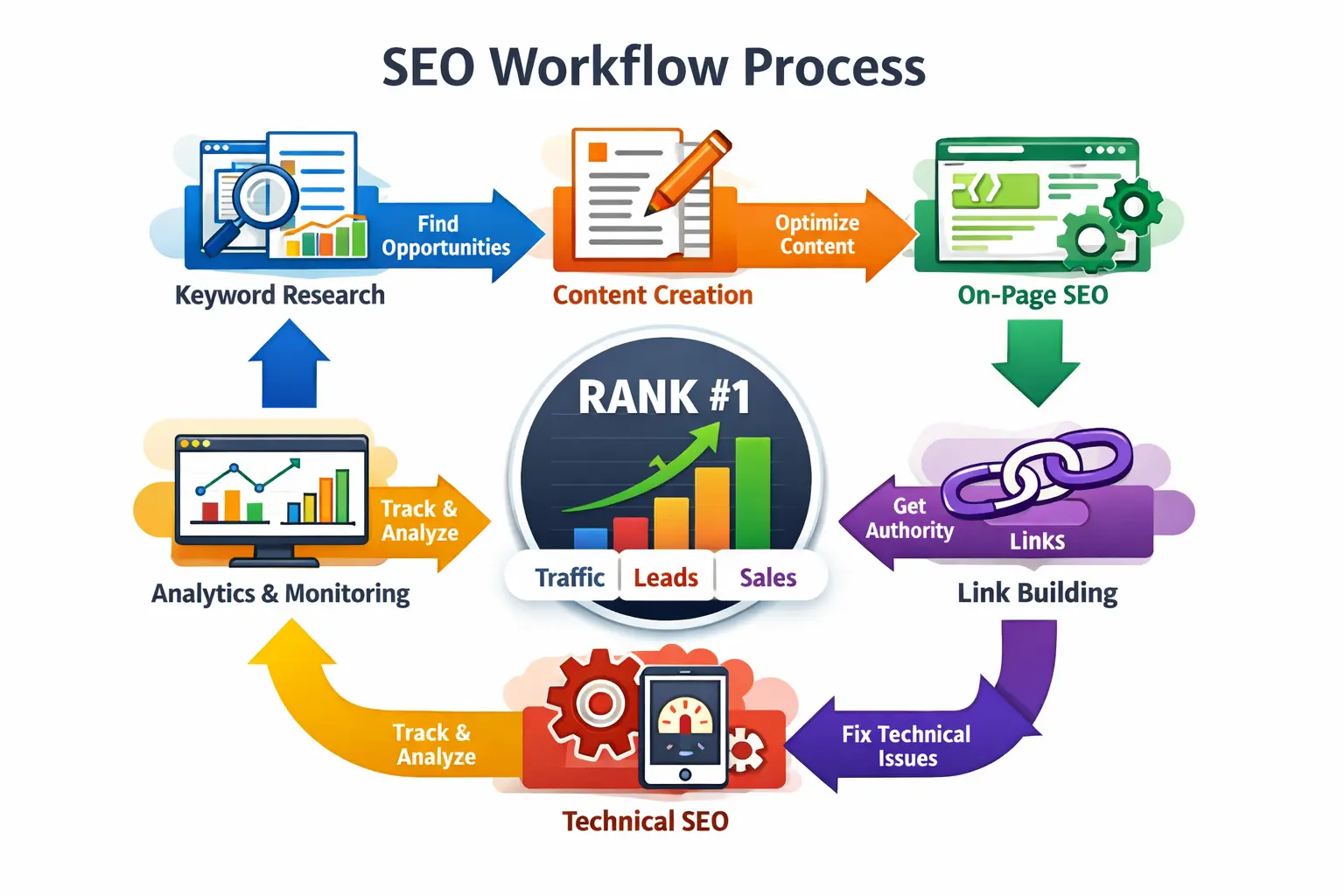
🟢 Complete SEO Strategy (From Zero to Hero)
Follow this roadmap:
Step 1:
Choose a niche
Step 2:
Find low-competition keywords
Step 3:
Write long, valuable articles
Step 4:
Optimize SEO (On-page + Technical)
Step 5:
Build backlinks
Step 6:
Publish consistently
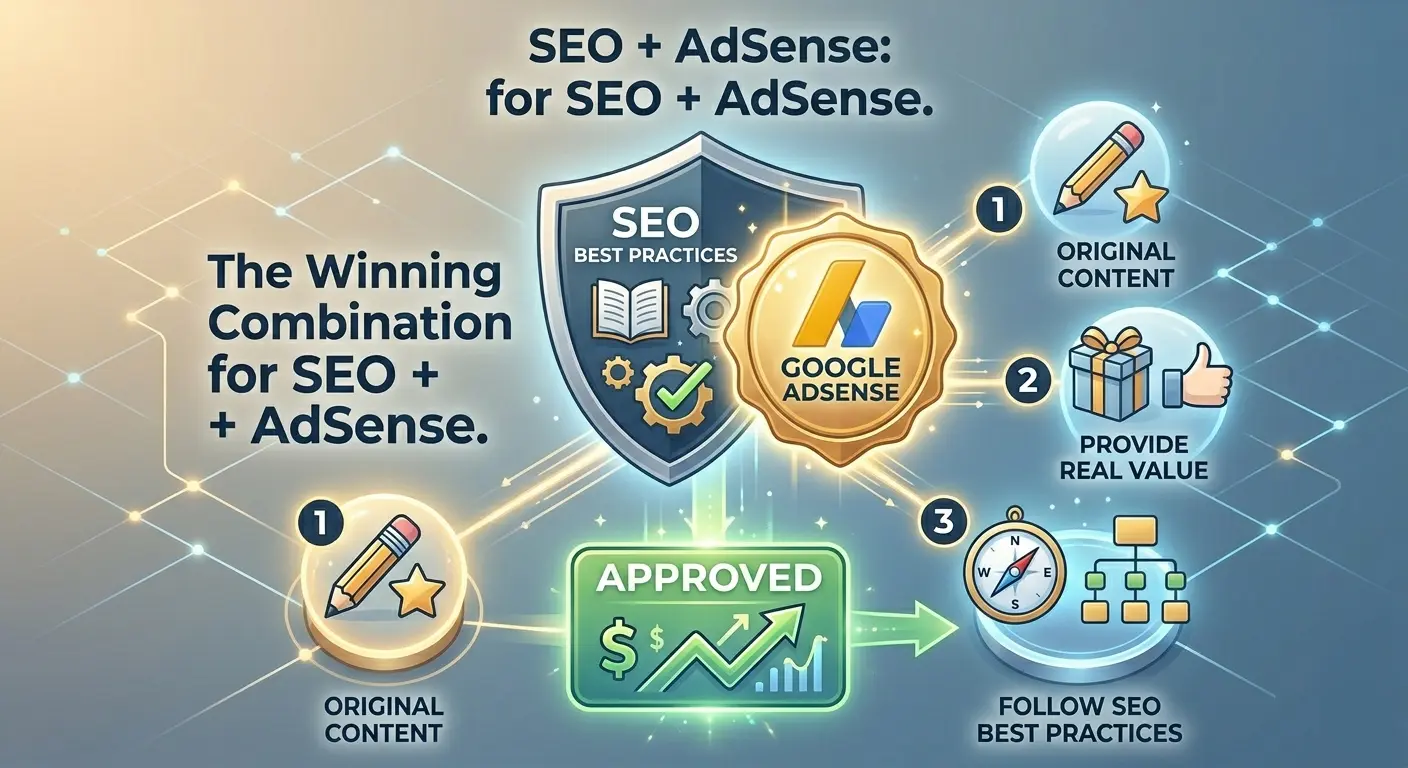
🟢 SEO + AdSense: The Winning Combination
To get accepted in Google AdSense, your website must:
-
Have original content
-
Provide real value
-
Be well-structured
-
Follow SEO best practices
👉 This article alone helps you meet these conditions.
🟢 Final Thoughts: The Truth About SEO
SEO is NOT:
-
Quick
-
Easy
-
Instant
SEO IS:
-
A long-term strategy
-
A skill you build
-
A system you follow
If you stay consistent…
👉 You WILL rank.