Table of Contents
A remarkable new archaeological discovery at the famous Step Pyramid of Djoser in Saqqara has stunned researchers and reignited debate about the technological capabilities of ancient Egyptian civilization.
According to recent findings by a team of French archaeologists, the ancient Egyptians may have used an advanced hydraulic system to assist in constructing the pyramid — a revelation that could transform modern understanding of engineering in ancient Egypt.
For centuries, historians and archaeologists have admired the precision, scale, and sophistication of Egypt’s pyramids while continuing to question how these colossal structures were built thousands of years ago.
The latest evidence suggests that the builders of the Step Pyramid may have relied on far more advanced construction techniques than previously believed.
A Shocking Discovery in Ancient Egypt
The discovery centers around evidence of a hydraulic system integrated into the Step Pyramid complex.
Researchers believe ancient engineers may have used water reservoirs, channels, and basins to create a primitive hydraulic lifting mechanism capable of transporting heavy stone blocks during construction.
If confirmed, this theory would challenge long-standing assumptions that pyramid construction relied entirely on manual labor, ramps, and simple tools.
Why the Discovery Matters
- Suggests advanced engineering knowledge
- Introduces possible hydraulic lifting technology
- Changes understanding of pyramid construction
- Highlights the sophistication of ancient Egypt
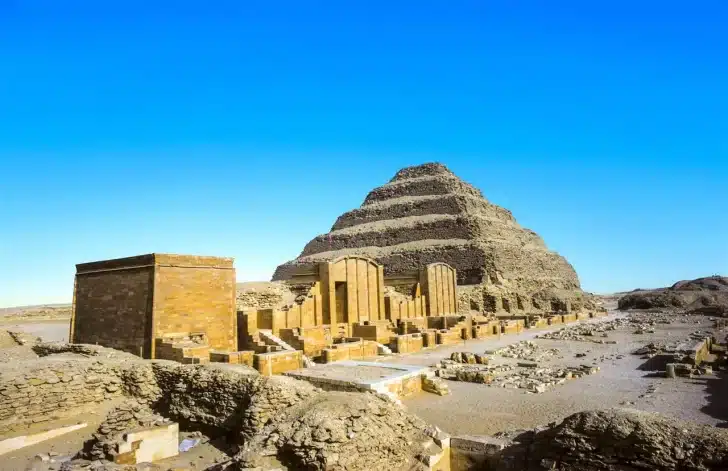
The findings are particularly significant because the Step Pyramid of Djoser is widely recognized as the earliest large-scale stone pyramid ever built.
The Step Pyramid of Djoser
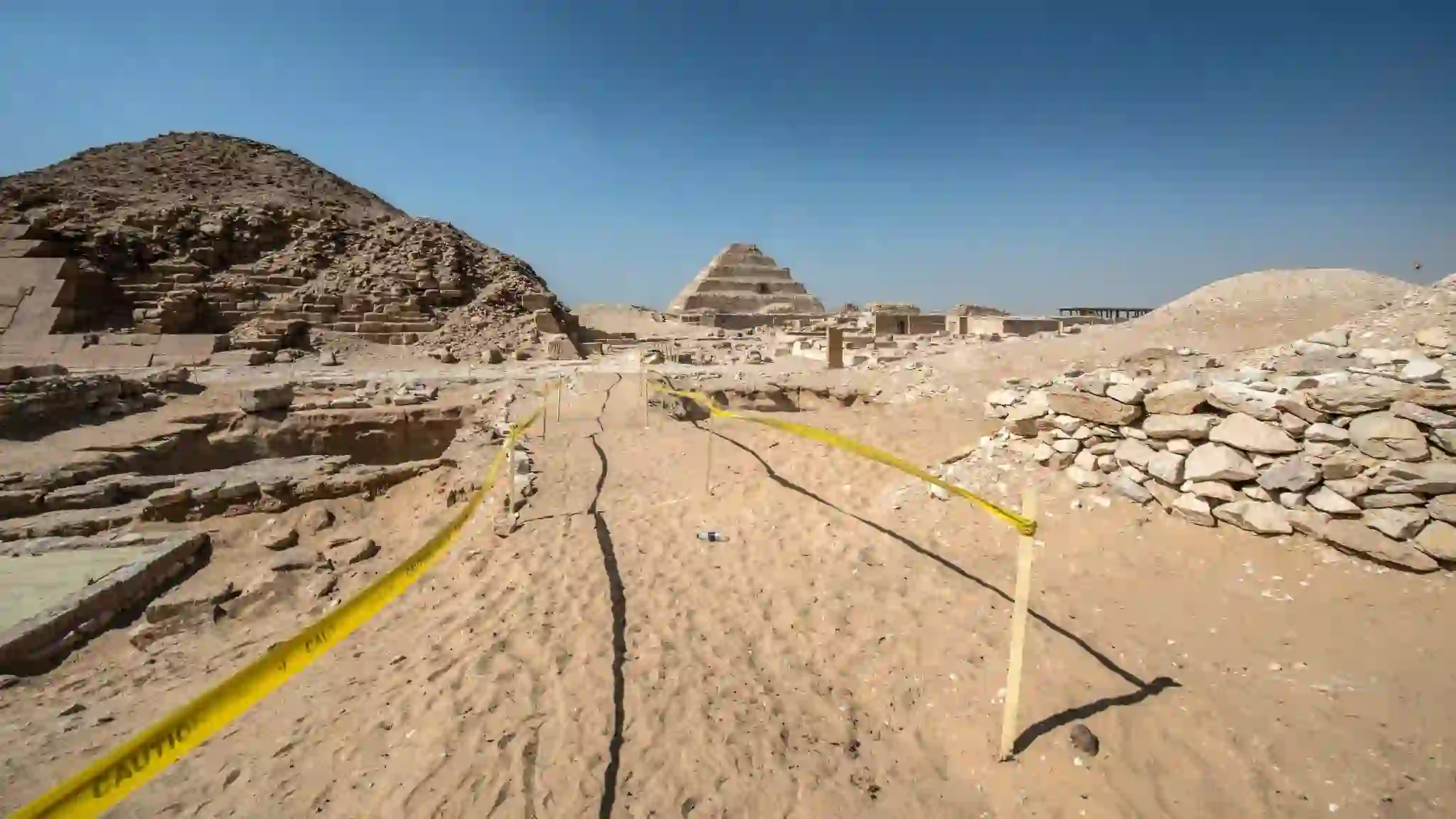
The Step Pyramid of Djoser is located in the Saqqara necropolis near modern-day Cairo.
Built during Egypt’s Third Dynasty around the 27th century BCE, it is considered one of the most important monuments in human architectural history.
Key Facts About the Pyramid
- Built for Pharaoh Djoser
- Designed by Imhotep
- First known pyramid in Egypt
- One of the earliest monumental stone structures
Originally conceived as a traditional rectangular tomb known as a mastaba, the structure was later transformed into a six-tiered stepped pyramid.
The pyramid symbolized the pharaoh’s ascent to the heavens and represented a revolutionary leap in architectural design.
Evidence of a Hydraulic System
The most surprising aspect of the recent discovery is the evidence suggesting the use of water-powered engineering.
Archaeologists identified structures resembling:
- Water basins
- Reservoir systems
- Underground channels
- Hydraulic control areas
Researchers theorize that these systems may have helped move enormous stone blocks vertically during construction.
The proposed hydraulic lifting system would have significantly reduced the amount of human force required to raise materials to higher levels of the pyramid.
How the System May Have Worked
According to the theory, water pressure could have been used to elevate construction platforms or assist in transporting heavy materials upward.
While additional evidence and testing are still required, the concept introduces a completely new perspective on pyramid engineering.

Imhotep and Revolutionary Architecture
The Step Pyramid was designed by the legendary architect Imhotep, one of the most influential figures in ancient Egyptian history.
Imhotep served as:
- Architect
- Engineer
- Physician
- Advisor to Pharaoh Djoser
He is often regarded as the world’s first known architect by name.
Under Imhotep’s vision, the Step Pyramid became a groundbreaking architectural achievement that transformed Egyptian construction techniques forever.
Architectural Innovations Introduced
- Large-scale stone construction
- Stepped pyramid design
- Advanced structural planning
- Monumental ceremonial complexes
The possibility that Imhotep’s engineers also developed hydraulic systems further elevates his historical significance.
Ancient Egyptian Engineering Capabilities
The discovery strengthens growing evidence that ancient Egyptians possessed highly advanced technical knowledge.
For decades, researchers have debated how ancient builders achieved such extraordinary precision using supposedly primitive tools.
Examples of Egyptian Engineering Achievements
- Pyramid alignment precision
- Massive stone transportation
- Sophisticated irrigation systems
- Astronomical orientation
- Complex temple construction
The hydraulic system theory suggests that ancient Egyptian engineers may have understood fluid mechanics and large-scale construction logistics far better than previously believed.

How This Discovery Could Rewrite History
If the hydraulic system theory is validated through further research, it could significantly alter modern understanding of ancient engineering.
The discovery raises important questions:
- Did other pyramids use similar systems?
- How advanced was Egyptian engineering knowledge?
- Were additional technologies lost over time?
Historians may need to reconsider assumptions about the technological limitations of ancient civilizations.
The Step Pyramid could become evidence that ancient Egyptians possessed engineering solutions centuries ahead of their time.
Future Archaeological Investigations
Researchers continue studying the Saqqara complex to better understand the newly discovered structures.
Future archaeological investigations may focus on:
- Hydraulic system reconstruction
- Water flow analysis
- Underground infrastructure mapping
- Comparisons with other pyramids
Modern technologies such as 3D scanning, satellite imaging, and ground-penetrating radar may help reveal additional hidden engineering features.
The discovery also encourages renewed interest in ancient Egyptian scientific achievements and construction methods.
Final Thoughts
The Step Pyramid of Djoser has long stood as one of humanity’s greatest architectural achievements.
Now, this latest archaeological discovery may reveal that ancient Egyptians possessed engineering capabilities far more sophisticated than previously imagined.
The evidence of a possible hydraulic lifting system opens exciting new possibilities about how pyramids were constructed and how advanced ancient civilizations truly were.
As research continues, the mysteries of ancient Egypt may once again challenge modern assumptions about history, engineering, and human innovation.
Frequently Asked Questions
What is the Step Pyramid of Djoser?
The Step Pyramid of Djoser is the first known pyramid built in ancient Egypt and is located in Saqqara.
Who designed the Step Pyramid?
The pyramid was designed by the famous architect Imhotep during Egypt’s Third Dynasty.
What was the recent discovery?
Archaeologists discovered evidence suggesting the ancient Egyptians may have used a hydraulic system during construction.
Why is the discovery important?
The findings could change modern understanding of ancient Egyptian engineering and construction technology.
Could other pyramids contain similar systems?
Researchers believe it is possible that other pyramids may also contain undiscovered engineering technologies.
A latest discovery on the Step Pyramid of Djoser, the primary in Egypt, has astonished archaeologists, revealing that the traditional Egyptians might have used superior expertise in its building—a discovering that would change our understanding of engineering in historic Egypt.
Regardless of the centuries which have handed since their building, the pyramids of Egypt proceed to fascinate specialists and the merely curious. The best way through which these monumental constructions had been erected and the precision with which they had been designed stay an enigma. Nevertheless, a latest discovery has shocked the archaeological world, revealing that the traditional Egyptians might have used superior expertise to facilitate the development of the Pyramid of Djoser, situated in Saqqara.
This discovery was made by a staff of French archaeologists who, after years of analysis, uncovered proof of a hydraulic system built-in into the Step Pyramid. This technique, which used water collected in basins and reservoirs, allowed for using hydraulic lifts to move heavy stone blocks to the required heights throughout building. This discovery means that the Egyptians didn’t rely solely on human power and rudimentary strategies, however reasonably possessed superior technical data that enabled them to construct these colossal constructions.
Zoser and the pyramid that revolutionized Egyptian structure
The Pyramid of Djoser, constructed for the pharaoh of the identical identify in the course of the Third Dynasty, is acknowledged as the primary pyramid in Egypt and one of many earliest nice examples of monumental structure in human historical past. Initially conceived as an oblong tomb, the pyramid was remodeled by the famend architect Imhotep right into a stepped construction with six terraces, representing the pharaoh’s ascent to the realm of the gods.
The latest discovery provides a brand new layer of complexity to this architectural masterpiece, suggesting that the pyramid symbolized not solely the pharaoh’s divine energy but additionally the Egyptians’ mastery of expertise and engineering. This revelation may rewrite total chapters of engineering historical past in Historical Egypt, revealing a civilization much more superior than beforehand thought.
A discovery that adjustments historical past
The invention of the hydraulic system within the Pyramid of Djoser is just not solely astonishing for its age and complexity, but additionally raises new questions in regards to the technological capabilities of the traditional Egyptians. This discovering opens the door to the chance that different Egyptian pyramids and constructions comprise related applied sciences, ready to be found by future generations of archaeologists.
As investigations proceed, this discovery guarantees to additional unveil the secrets and techniques of one in all historical past’s most enigmatic and superior civilizations. The Pyramid of Djoser, as soon as once more, stands as a monument not solely to the pharaoh who commissioned its building, but additionally to the ingenuity and creativity of a folks whose affect stays palpable hundreds of years later.