Table of Contents
- NASA’s Historic Communication Breakthrough
- What Is the Deep Space Optical Communications System?
- The Historic 31 Million Kilometer Transmission
- How Laser-Based Space Communication Works
- Advantages Over Traditional Radio Systems
- Why This Matters for Future Space Missions
- The Role of NASA’s Jet Propulsion Laboratory
- The Future of Deep Space Internet
- Frequently Asked Questions
NASA Achieves Historic Deep Space Video Transmission Using Laser Communication Technology
:contentReference[oaicite:1]{index=1} has achieved a historic milestone in space communication technology by successfully receiving a video signal transmitted from 31 million kilometers away from Earth.
The breakthrough was made possible using the revolutionary :contentReference[oaicite:2]{index=2} system, commonly known as DSOC.
The achievement marks a major advancement in interplanetary communication and could fundamentally change how future deep space missions transmit information across enormous cosmic distances.
As humanity prepares for future missions to Mars and beyond, faster and more reliable communication systems will become essential for exploration, scientific research, and astronaut safety.

NASA’s Historic Communication Breakthrough
In its latest successful test, NASA managed to transmit a 15-second high-definition video clip across a distance of approximately 31 million kilometers.
The signal was received by engineers at the :contentReference[oaicite:3]{index=3} in California.
Most impressively, the data reached Earth in under two minutes while traveling at transmission speeds of up to 1.2 gigabits per second.
Why This Is Important
- Demonstrates high-speed deep space communication
- Enables future HD video transmissions from space
- Improves data transfer efficiency
- Supports long-distance interplanetary missions
This accomplishment establishes a new benchmark in space communication capabilities.
What Is the Deep Space Optical Communications System?
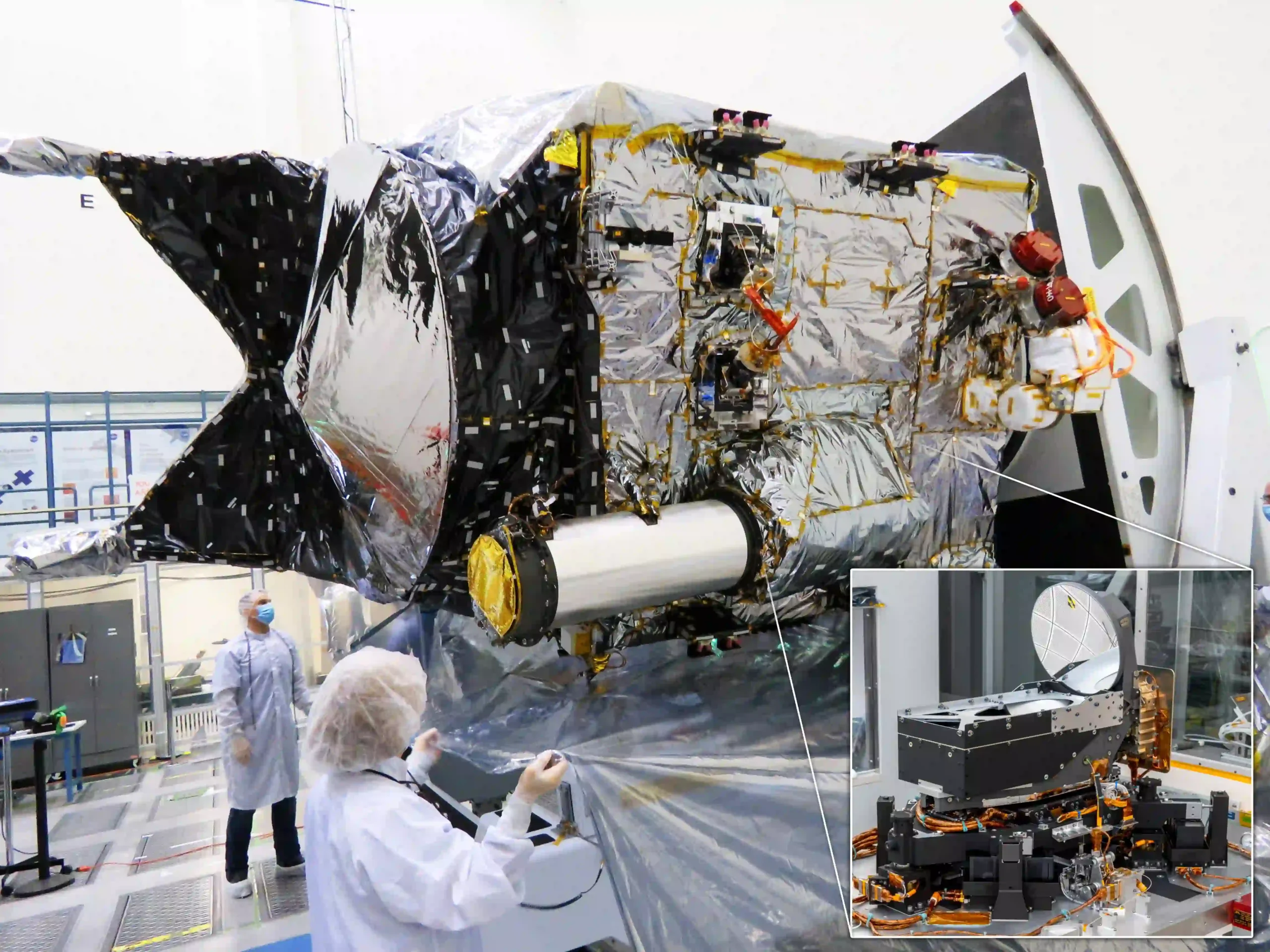
The Deep Space Optical Communications system is an advanced communication technology developed by NASA to improve how data is transmitted across deep space.
Unlike traditional radio communication systems, DSOC uses laser-based optical signals.
Main Functions of DSOC
- Transmit large amounts of data
- Increase communication speed
- Reduce signal delay
- Improve transmission efficiency
- Support future interplanetary missions
The system converts optical laser signals into digital data, allowing spacecraft to communicate with Earth more efficiently than ever before.
The Historic 31 Million Kilometer Transmission
The recent transmission test represented one of the most advanced demonstrations of optical communication ever performed in deep space.
NASA transmitted a short high-definition video clip over a distance equal to roughly 80 times the distance between Earth and the Moon.
Key Achievements of the Test
- 31 million kilometer transmission distance
- 15-second HD video delivery
- 1.2 gigabits per second transfer speed
- Signal delivery in under two minutes
The success proves that optical communication can reliably handle high-bandwidth data transfers across interplanetary distances.
How Laser-Based Space Communication Works
Traditional spacecraft communication relies mainly on radio frequency systems.
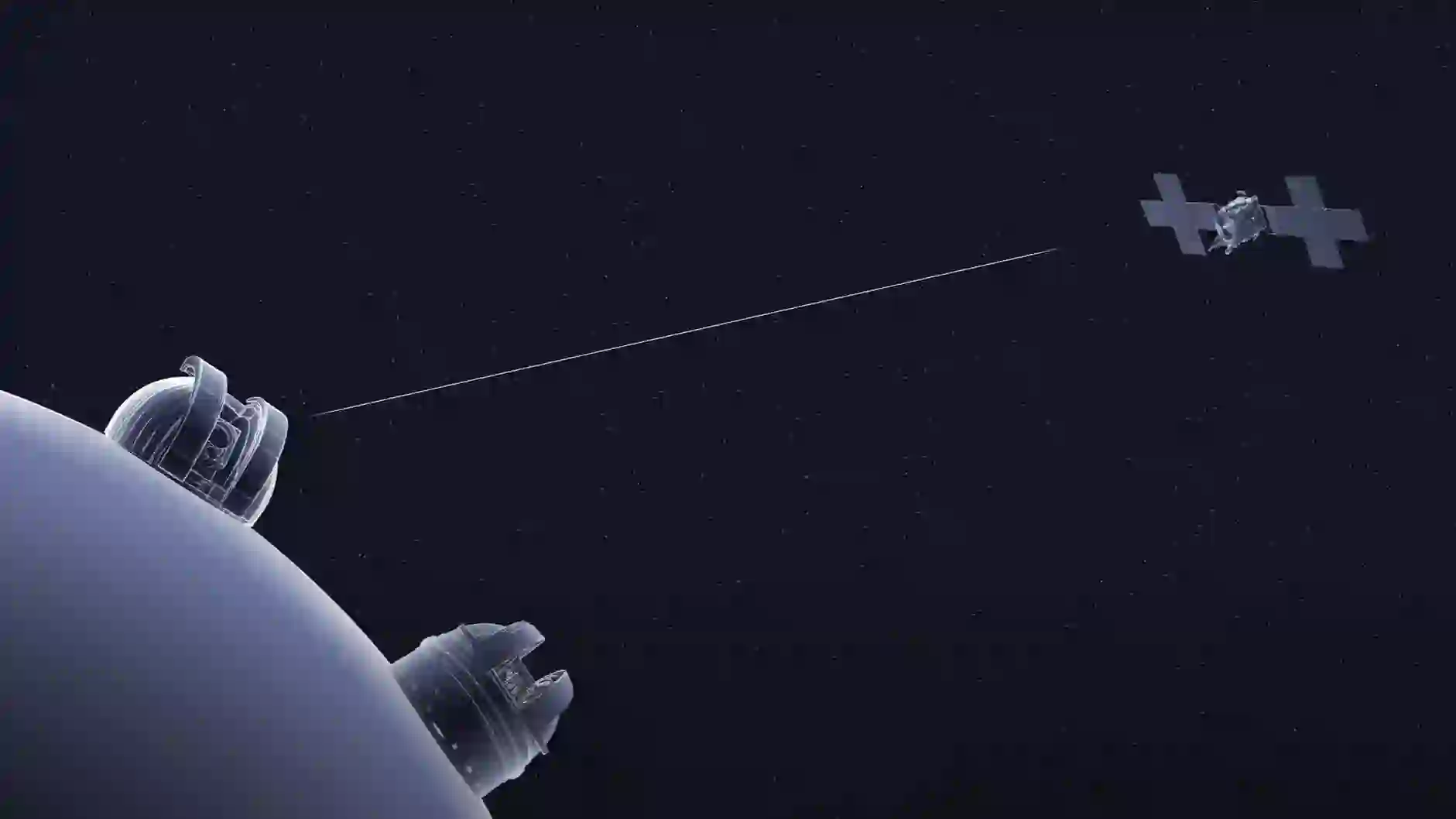
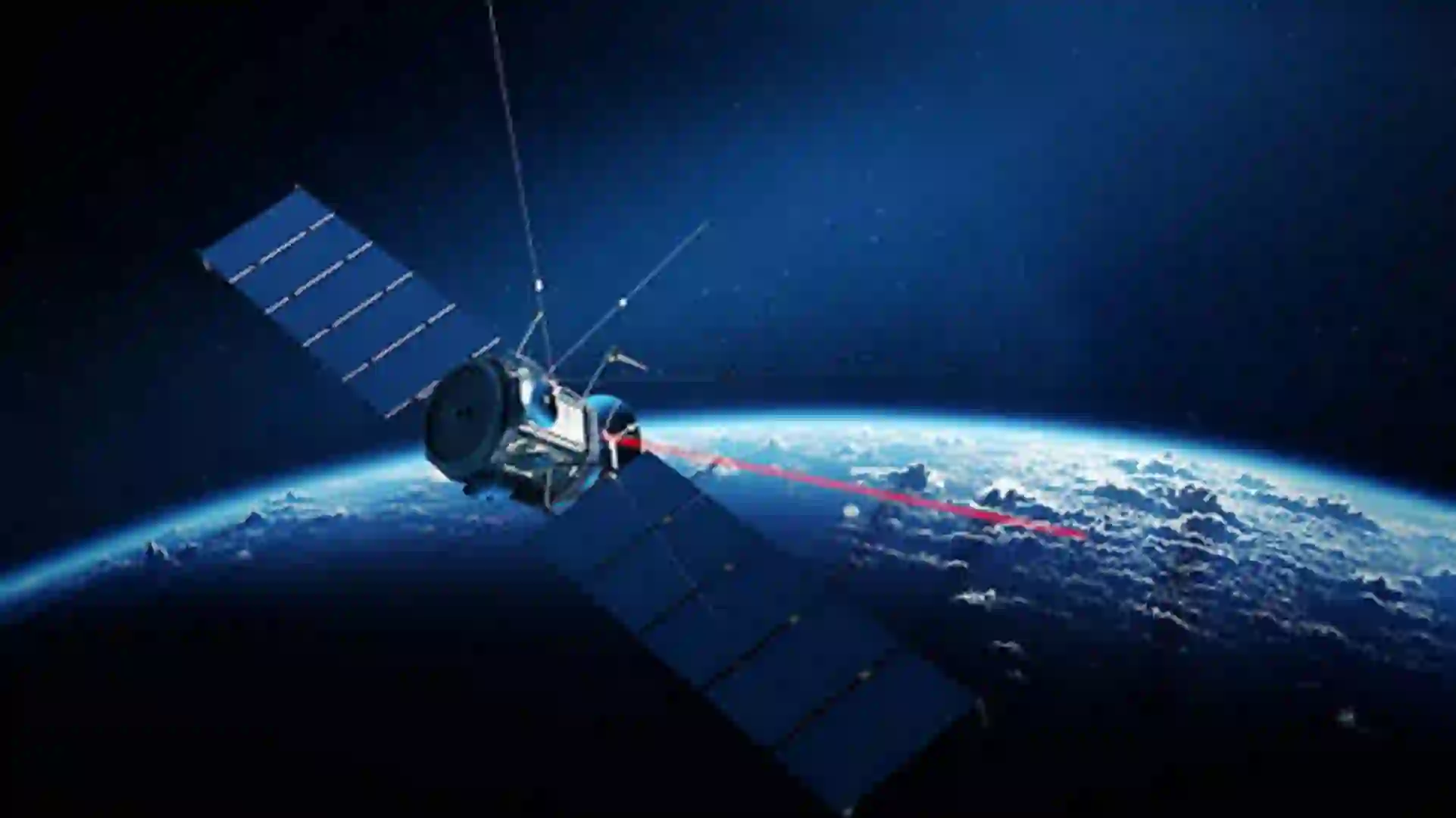
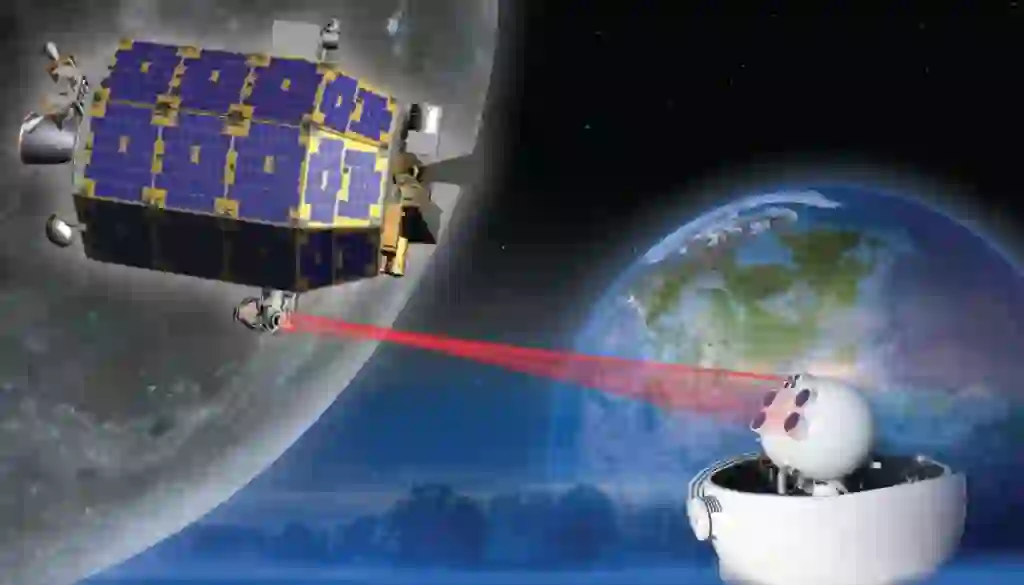
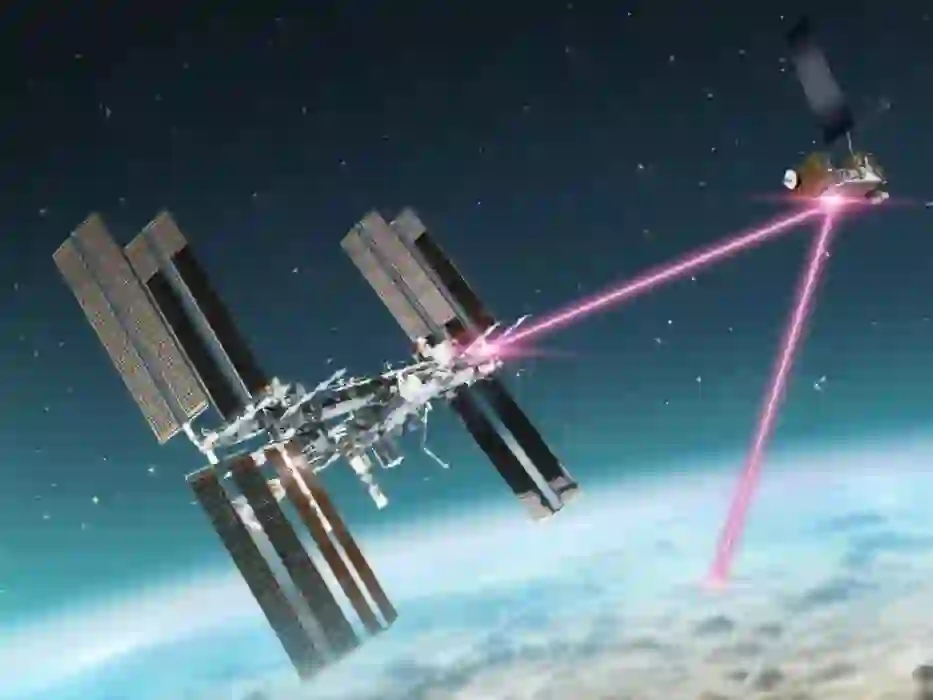
DSOC instead uses highly focused laser beams to send optical signals through space.
How the Technology Operates
- Lasers transmit encoded light signals
- Optical receivers capture the signals
- Digital systems decode transmitted information
- Data is reconstructed on Earth
Laser communication allows significantly more information to be transmitted using narrower beams and higher frequencies.
This results in faster, more efficient communication compared to older radio-based systems.
Advantages Over Traditional Radio Systems
Optical communication offers several major advantages over conventional radio transmissions.
Main Benefits of DSOC Technology
- Much higher data speeds
- Improved signal efficiency
- Better support for HD video transmission
- Reduced bandwidth limitations
- Enhanced future mission capabilities
As future missions generate increasingly large amounts of scientific data, these improvements will become critical.
High-resolution imagery, scientific analysis, and live mission monitoring all require faster communication systems.
Why This Matters for Future Space Missions
The success of DSOC has enormous implications for future exploration missions beyond Earth orbit.
Upcoming missions to Mars, deep space probes, and future crewed exploration programs will depend heavily on reliable communication.
Future Applications Could Include
- Real-time spacecraft monitoring
- High-definition video from Mars
- Faster scientific data analysis
- Improved astronaut communication
- Advanced robotic mission support
The technology may eventually support a form of deep-space internet infrastructure connecting future spacecraft and planetary bases.
The Role of NASA’s Jet Propulsion Laboratory
The :contentReference[oaicite:4]{index=4} played a critical role in developing and testing the DSOC system.
JPL has long been one of NASA’s leading research centers for robotic exploration and communication technology.
JPL Contributions Include
- Deep space communication research
- Robotic mission development
- Optical transmission systems
- Spacecraft engineering innovation
The successful reception of the optical signal demonstrates decades of advancement in communication engineering.
The Future of Deep Space Internet
Many scientists believe optical communication systems like DSOC could become the foundation for a future interplanetary communication network.
As humanity explores deeper into the solar system, faster communication will become increasingly important.
Potential Future Developments
- Interplanetary communication networks
- Real-time Mars communication
- Autonomous spacecraft coordination
- Advanced robotic exploration systems
Laser communication could eventually allow astronauts and researchers to exchange massive amounts of information across vast distances far more efficiently than today’s systems allow.
Final Thoughts
NASA’s successful DSOC transmission represents one of the most exciting advances in modern space communication technology.
By demonstrating reliable high-speed laser communication across 31 million kilometers, NASA has taken a major step toward enabling future interplanetary exploration.
The achievement highlights how innovation in communication technology is becoming just as important as rocket engineering in the future of space travel.
As missions venture farther into the cosmos, systems like DSOC may become essential tools for connecting humanity across the solar system.
Frequently Asked Questions
What is NASA’s DSOC system?
DSOC stands for Deep Space Optical Communications, a laser-based communication technology developed by NASA.
How far was the video transmitted?
The video signal was transmitted from approximately 31 million kilometers away from Earth.
Why is optical communication important?
Optical communication allows much faster and more efficient data transfer than traditional radio systems.
What speeds did the transmission achieve?
The system achieved data transmission speeds of up to 1.2 gigabits per second.
Could this technology be used for Mars missions?
Yes, DSOC technology could play a major role in future Mars and deep-space missions.Progressive transmission units a brand new customary in house exploration
In an unprecedented advance for house expertise, NASA has introduced a historic feat in interplanetary information transmission. In a latest take a look at of the Deep House Optical Communications System (DSOC), the house company efficiently acquired a video sign from a distance of 31 million kilometers from Earth. This achievement marks a major milestone within the modernization of house communications and opens new prospects for future interplanetary missions.
The transmission, a 15-second video clip, was carried out utilizing cutting-edge expertise that permits information to be despatched at speeds of as much as 1.2 gigabits per second. The sign, acquired by the Jet Propulsion Laboratory (JPL), took lower than two minutes to succeed in the receiving system on Earth, demonstrating the effectivity and velocity of the DSOC.
The DSOC, an revolutionary system designed to enhance information switch in deep house, makes use of laser gentle to transform optical indicators into digital information. This expertise gives a a lot larger transmission capability than conventional strategies, enabling the transmission of high-definition photos and movies from extraordinarily lengthy distances.
This development not solely underscores the DSOC’s capability to deal with giant volumes of knowledge, but additionally units a brand new customary in house communications. In accordance with a NASA spokesperson, “The flexibility to relay high-definition information from nice distances is essential for future missions, which would require the transmission of detailed, high-quality data from past Earth orbit.”
The success of this take a look at is a major step towards conducting interplanetary missions and future explorations past the photo voltaic system. The flexibility to transmit information at excessive speeds over such huge distances is not going to solely facilitate the gathering and evaluation of data in actual time, however can even open up new alternatives for analysis and improvement within the area of house exploration.
With this achievement, NASA not solely reaffirms its management in house expertise but additionally demonstrates its ongoing dedication to innovation and scientific development. The DSOC is poised to develop into a basic instrument for the way forward for deep house exploration, paving the best way for brand spanking new missions and discoveries within the cosmos.